Seven States Test New Congressional Maps in Midterm Vote
Voters in California, Florida, and five other states cast ballots in redrawn districts that may not align with their previous voting patterns.
By Thabo Hoffmann ·
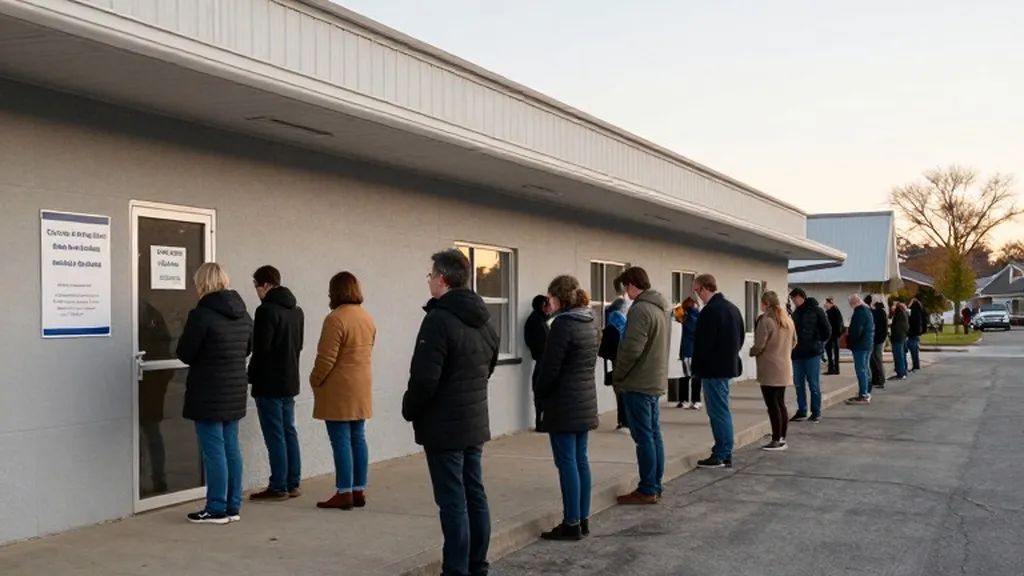
Tuesday, November 3, 2026, marks the midpoint of President Donald Trump's second term, with voters across the nation deciding who will control Congress for the final two years of his administration. All 435 seats in the U.S. House of Representatives are up for grabs, along with 35 of 100 Senate seats. The outcome will determine whether the president's party retains its legislative grip or faces a check from the opposition during a period defined by economic scrutiny and high early turnout.
Seven states are using new congressional maps this year following mid-decade redistricting. These states are California, Florida, Missouri, North Carolina, Tennessee, and Texas. Ohio also adopted a new map for its congressional races. The implementation of these new boundaries has altered the competitive landscape for dozens of candidates, particularly in districts that previously voted reliably for one party or the other.
Ballotpedia counts 46 battleground districts in the House race. Of these, 25 are currently held by Democrats and 21 by Republicans. The new maps have shifted the partisan composition of several of these competitive areas. In 2024, 21 districts held by Democrats voted for President Trump, while nine districts held by Republicans voted for Vice President Kamala Harris. This split suggests that the new districts may not vote in strict accordance with their historical leanings or the intentions of the redistricting process.
Republicans currently hold 218 seats in the House, while Democrats hold 214. With vacancies present, Democrats need a net gain of three districts to secure a majority. Republicans can afford to lose no more than two seats. The redistricting in states like Florida and Ohio was partly designed to protect Republican incumbents, but the AP notes that these new districts may not vote as drawn. This uncertainty adds a layer of complexity to the final tally as polls begin to close across the country.
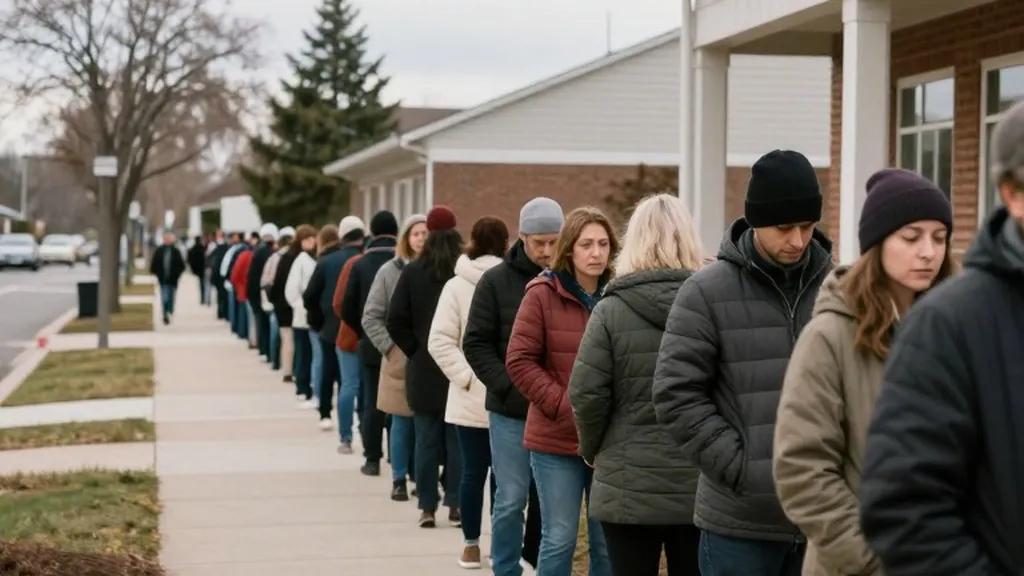
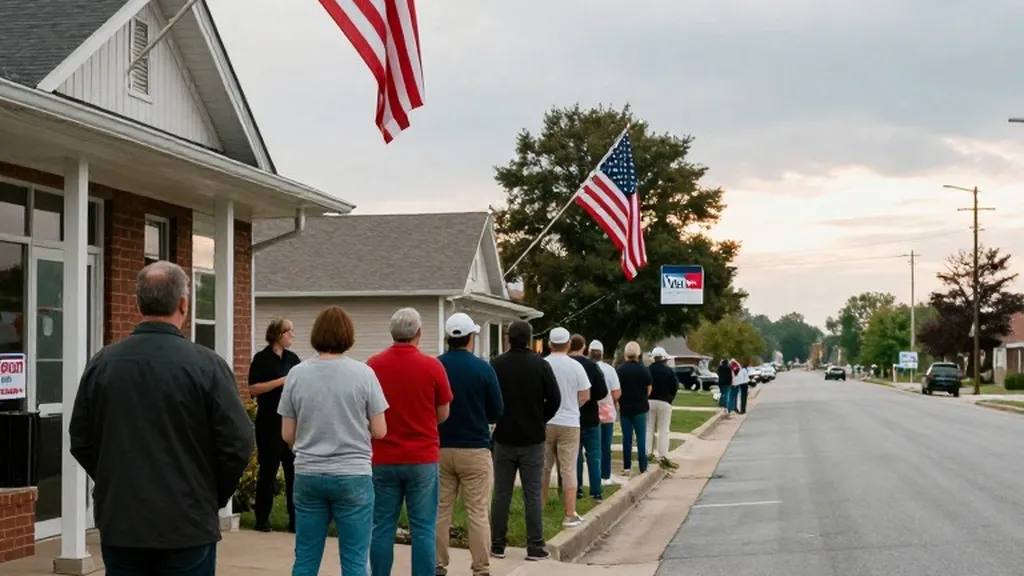
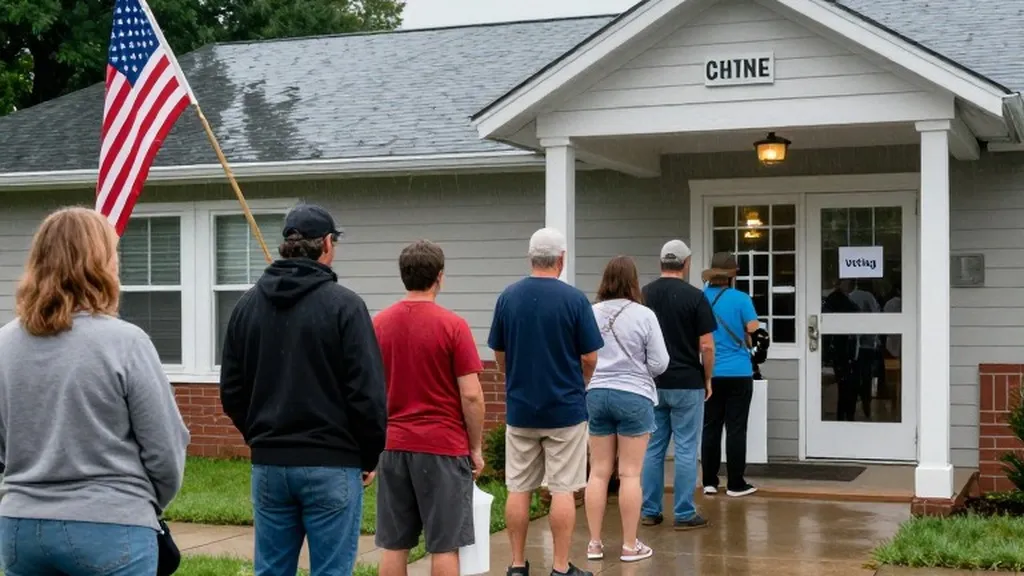
More than 57 million people had already voted as of Monday, surpassing the early vote totals from four years ago in many closely watched states. This surge in participation is a central concern for both parties. RNC Chairman Joe Gruters stated that everything depends on turnout, emphasizing that their plan relies on mobilizing the base. Conversely, DCCC Chair Rep. Suzan DelBene described the American people as angry and desiring change, signaling a push for voter engagement in the newly mapped districts.
The new congressional maps in states like North Carolina and Texas are particularly scrutinized by analysts. In North Carolina, Democratic former Governor Roy Cooper faces former RNC chair Michael Whatley in a Senate race, a contest influenced by the state's new district lines. In Texas, Republican Attorney General Ken Paxton, who won the nomination with Trump's backing, competes against Democrat James Talarico. The AP notes that these races are part of a broader fight for control, with the new maps potentially altering the balance of power in the House.
Voters in these seven states are weighing the same national issues as their counterparts elsewhere: high prices, the cost of living, and the direction of the country. AP-NORC polling indicates that 35% of U.S. adults approve of Trump's job performance, while about 7 in 10 say the country is heading in the wrong direction. In Florida, voter Mark Barker of Palm Beach Gardens expressed support for the president, while in North Carolina, librarian James Moore cited rising taxes and healthcare costs as primary concerns for his vote.
The redistricting process has also impacted the Senate races in some of these states. In Ohio, the new map coincides with a special election for the seat of JD Vance, who was elected to the vice presidency. Jon Husted, the Republican incumbent in the special election, faces Democratic former Senator Sherrod Brown. The AP highlights that economic strain and tariffs have made states like Maine and North Carolina competitive, with the new congressional boundaries potentially influencing the statewide mood and voter turnout.
Financially, the 2026 elections are likely to be the most expensive in history. Republican committees have outraised and outspent Democratic committees at the national level, aided by Trump-affiliated groups and Elon Musk. However, at the candidate level, Democrats have outraised their opponents. AP analysis of AdImpact data shows that 88.1% of Republican general election TV ad spending went to states and districts that Trump won in 2024, including areas where he won by more than 10 points. This heavy spending in safe Republican districts contrasts with the strategic focus on the newly mapped competitive areas.
Administration efforts to manage the election have also drawn attention. A federal judge temporarily barred the Trump administration from a plan to prevent noncitizen voting, and another judge ordered the administration to stop demanding that California officials segregate ballots from suspected noncitizens. These legal moves, alongside the Justice Department's threats to prosecute local election officials, have created an atmosphere of tension in the seven states with new maps. The U.S. Postal Service has added resources to ensure mail ballots are counted on time, a critical step in states like California where the election is largely conducted by mail.
As polls close, the focus turns to whether the new congressional maps in California, Florida, Missouri, North Carolina, Tennessee, Texas, and Ohio will hold firm or shift with the voter turnout. The AP describes the election as a referendum on the president's second term, with the outcome hinging on the performance of these specific districts. The final count will reveal if the redistricting efforts achieved their intended goals or if the voters in these new boundaries defied the projected margins.