Record Spending Defines 2026 Midterm Battle Over Congress
Republican committees outspent Democrats at the committee level, while Democratic candidates raised more funds, in the most costly election cycle in history.
By Lucas Collins ·
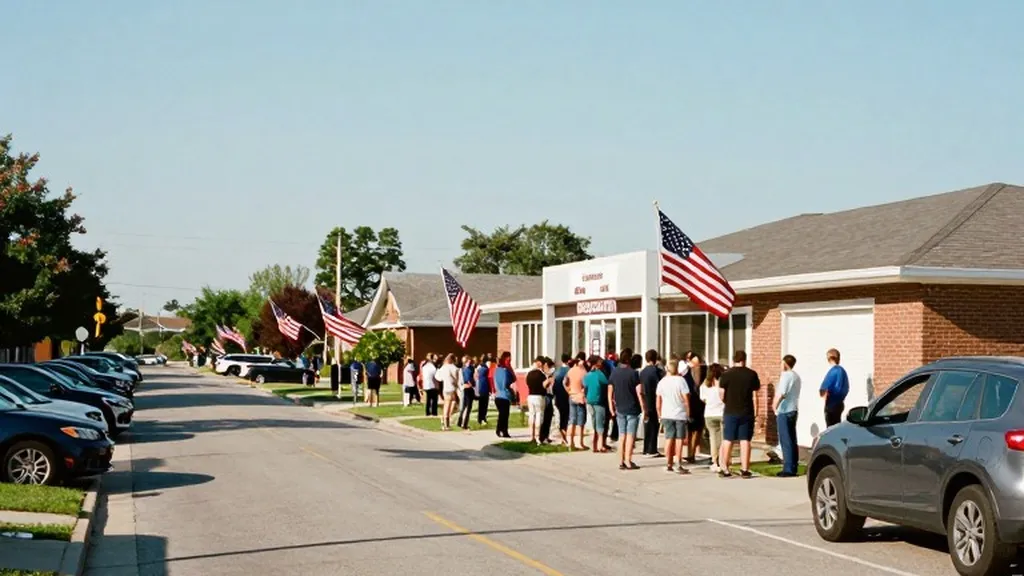
The 2026 midterm elections are shaping up to be the most expensive in American history as voters head to the polls to decide the balance of power in Congress for the final two years of President Donald Trump's second term. With all 435 House seats and 35 Senate seats on the ballot, the financial stakes have never been higher. The Associated Press reports that Republican committees have outraised and outspent their Democratic counterparts, a trend driven significantly by Trump-affiliated groups and contributions from Elon Musk. This spending surge reflects the intense competition for control of the legislative branch, where Democrats need a net gain of three House seats and four Senate seats to claim majorities, while Republicans can afford to lose only two seats in each chamber.
Despite the overall advantage at the committee level, the funding dynamic is nuanced. Democratic candidates, when looking at individual races, have outraised their Republican opponents. This candidate-level edge suggests a different strategy in how funds are allocated, with Democrats focusing resources on specific competitive districts rather than broad party-level initiatives. The contrast highlights a divergence in fundraising approaches, where Republican success at the committee level has been bolstered by large donor networks, while Democrats have relied on broader small-dollar fundraising efforts to support their individual nominees across the country.
An analysis of AdImpact data by the Associated Press reveals a striking concentration of Republican advertising dollars. Eighty-eight point one percent of Republican general election TV ad spending was directed to states and districts that Trump won in the 2024 presidential election. Within those areas, more than 850 million dollars were spent in regions where the president won by ten points or more. This heavy investment in solidly Republican territory suggests a strategy focused on reinforcing support in safe seats and maximizing turnout in areas where the party holds a strong base of voters, rather than splitting funds thinly across a wide array of battlegrounds.
The allocation of funds aligns with the broader political landscape described by the Associated Press, which characterizes the election as a referendum on the president's performance. Polling data shows that 35 percent of U.S. adults approve of Trump's job performance, while 25 percent approve of his handling of the economy. About seven in ten adults say the country is heading in the wrong direction, with most blaming the president for high prices. These economic concerns have driven voter engagement, with more than 57 million people already voting as of Monday, surpassing early vote totals from four years ago in many closely watched states.
Republican leadership is bracing for the possibility of losing the House while fighting to maintain their Senate majority. RNC Chairman Joe Gruters emphasized the critical importance of voter turnout, stating that if the party can turn out its voters, they will win. This sentiment underscores the financial imperative behind the massive ad buy in Trump-won districts, where high turnout is expected to secure key seats. In contrast, Democrats are described as cautiously optimistic, relying on their candidate-level fundraising advantage to compete in the 46 battleground districts identified by Ballotpedia, which include 25 seats held by Democrats and 21 by Republicans.
The role of Elon Musk in the fundraising landscape has been a defining feature of this cycle. His contributions have helped Republican committees outspend Democrats, providing a financial cushion that allows for sustained advertising campaigns throughout the fall. This influx of capital has enabled Republican groups to dominate the airwaves in key markets, particularly in states like Texas and Florida, where new congressional maps may influence the outcome. The presence of such significant private funding has raised questions about the influence of wealthy donors on the electoral process, a topic that has gained traction among voters concerned about the cost of politics.
Meanwhile, Democratic campaigns have focused on the cost of living and economic strain, themes that resonate with voters in competitive states. In places like Maine and Michigan, economic issues have made traditionally safe seats more competitive. The Associated Press notes that economic strain and tariffs have made Maine a toss-up, a fact that has likely influenced how both parties allocate their remaining funds. Democrats are leveraging their higher candidate-level fundraising to target these specific vulnerabilities, aiming to flip seats in states where the 2024 presidential margin was narrow.
The financial disparity between the two parties is also evident in the special elections for the rest of the terms Marco Rubio and JD Vance were elected to. In Florida and Ohio, the races have become focal points for spending, with both parties investing heavily to secure these seats. The AP analysis of spending data shows that these high-profile races have attracted a significant portion of the total ad budget, reflecting the importance of maintaining or gaining control of the Senate. The outcome of these races will be crucial in determining whether Republicans can hold onto their 53-seat majority or if Democrats can make the necessary gains to take control.
As polls open across the country, the focus remains on what the money has bought in terms of voter attention. The sheer volume of advertising has saturated media markets in key states, ensuring that voters are constantly reminded of the stakes involved in the election. For voters like Mark Barker of Palm Beach Gardens, Florida, who says he is following Trump closely and thinks he is doing an awesome job, the message has been clear. For others like James Moore, a librarian in Raleigh, North Carolina, who cites higher taxes and healthcare costs, the opposing message has been equally prominent. The financial war has ensured that both sides have had the resources to make their case to the electorate.