Service Workers Topple Lula's Factory Base in Brazil Run-Off
A shift from manufacturing to delivery apps and retail has eroded support for the sitting president, forcing a decisive final vote on Sunday.
By Emmanuel Obasi ·
Thirty-three million Brazilians abstained from voting in this month's first-round presidential election, the highest number of non-voters since 1998. This massive block of undecided or disengaged citizens now holds the key to Sunday's run-off between President Luiz Inácio Lula da Silva and former president Jair Bolsonaro's son, Flávio Bolsonaro.
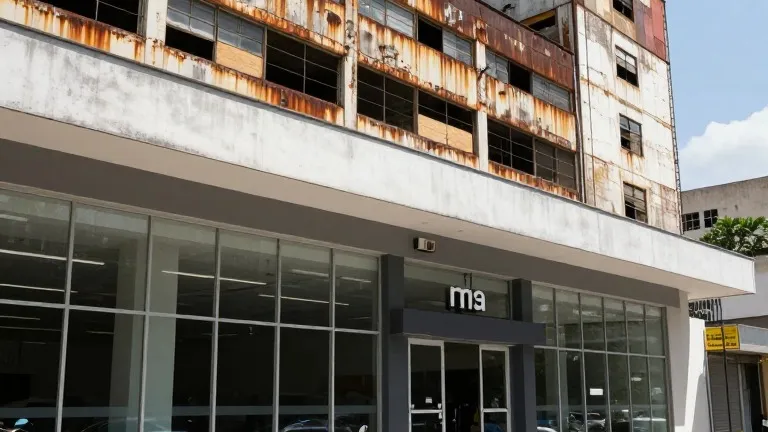
The electoral shift is driven by structural changes in the Brazilian labor market. In Osasco, a municipality near São Paulo that served as an industrial stronghold for decades, closed metal, chemical, and textile factories have been replaced by shopping malls and headquarters for delivery app companies. Gilberto Almazan, a metalworkers' union leader in the city, notes that the traditional working class has largely vanished from the factory floor.
Almazan describes the local union movement as stuck in the 'Middle Ages' while the workforce has moved into the gig economy. He characterizes the rise of drivers, food couriers, and small traders as 'Uber-isation.' These workers prioritize schedule flexibility over the collective bargaining and welfare structures that historically supported Lula's political base. The municipality voted for Lula in 2022 but backed Flávio Bolsonaro in the first round this month.
Richard Lapper, an author who has written biographies of both candidates, argues that Brazil industrialized late and deindustrialized early, intensifying the economic shock. He describes Lula as a 'victim of his own success.' Although unemployment reached a record low and Brazil was removed from the United Nations Hunger Map under Lula's current term, Lapper points to a crisis of expectations. Inflation, household debt, and high interest rates have made the improvement in living standards difficult for ordinary citizens to feel.
Voters express this frustration directly. Robson, a 53-year-old civil servant who previously supported Lula, blames the government's 'mismanagement' for a heavy tax burden. Tairine, a hot dog seller who previously abstained, says nothing has changed since Lula returned to office and plans to vote for Bolsonaro. Gisele Bonfim, a lawyer who voted for Lula in 2022, cites the 'hope of change' offered by the Bolsonaro camp.
Flávio Bolsonaro has proposed cutting government spending and ministries while retaining some of Lula's flagship welfare programs. He faces corruption accusations, which he denies. His campaign relies on the growing influence of evangelical churches, which serve about a quarter of the Brazilian population. Pastor Silas Malafaia, who is investigating alleged obstruction of justice in his father-in-law's coup trial, says Flávio Bolsonaro shares the church's values on family and abortion.
Lula's campaign is responding with large-scale mobilization. The party claims a rally in São Paulo drew approximately one million people, a figure supported by widely shared aerial footage. The 80-year-old president has also used social media to counter claims that he is too old for the role, referring to himself as the 'king of selfies.'
Among the poorest voters, Lula's economic record retains strength. In Maré, one of Rio de Janeiro's largest favelas, Lula won despite above-average abstention rates. Vitoria, an 18-year-old mother earning less than $400 a month, credits Lula with raising the minimum wage and providing free essential medicines. She fears Bolsonaro's plan to designate the Comando Vermelho gang a terrorist organization, citing police raids in Rio last year that killed more than 130 people.
Andreza Dionísio, a resident of Maré, attributes local low turnout to last-minute changes to polling station locations and a general sense of hopelessness. The final vote will test whether Lula can convince the new service sector workforce that his administration offers a fresh economic narrative or if they will stick with the rejection of the status quo signaled in the first round.
Source: BBC News
More Business · World news · Consumer Watch · Report a business · Got a Story?