Flávio Bolsonaro refuses to concede defeat after party accepts Lula's win
Liberal Party president Valdemar Costa Neto acknowledged the results, but the candidate cited passport issues and power abuses in a video released Monday.
By Emmanuel Obasi ·
Flávio Bolsonaro has declined to formally concede the Brazilian presidential election, even though his political party has accepted the results that place incumbent Luiz Inácio Lula da Silva in power. The split in position emerged on Monday as the Liberal Party acknowledged the outcome while the candidate himself raised new objections regarding the fairness of the contest.
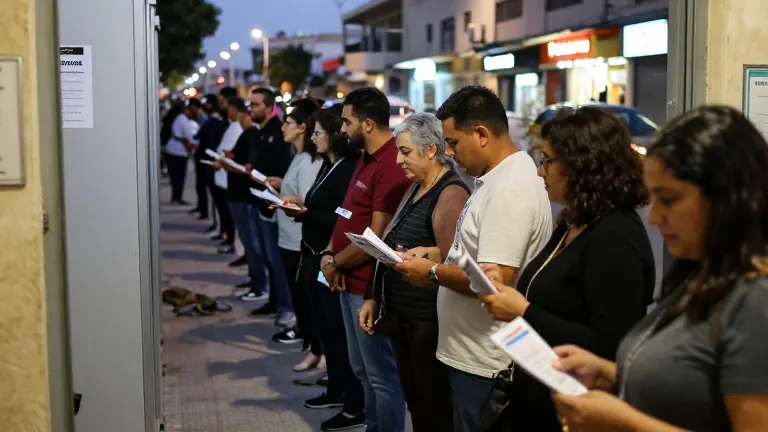
Valdemar Costa Neto, the president of the Liberal Party, issued a statement confirming the party's recognition of the election results. He noted, however, that questions concerning the voting process still require clarification. This acceptance followed a chaotic Sunday in which the Brazilian Supreme Court ordered polling stations to remain open until 7 p.m. The extension was granted after appeals from both campaigns, with Lula's team citing public transportation disruptions and Bolsonaro's team pointing to heavy rain in the south.
Bolsonaro initially planned to seek an annulment of the election, citing irregularities including the late change to voting hours. In a video posted on Monday, he shifted his legal strategy, stating he would instead seek to disqualify Lula's victory. He argued that the incumbent abused political and economic power. "The law must apply to everyone," Bolsonaro said. "The competition must be fair and equal, which did not happen." He did not provide specific evidence to support the claim of abuse.
The candidate also addressed a travel restriction imposed by the Federal Police. Bolsonaro said he was ordered to surrender his passports while visiting his father, former President Jair Bolsonaro, in Brasília. The order was issued by Supreme Court Justice Alexandre de Moraes in a separate investigation. Bolsonaro stated that the restriction was triggered by remarks from his brother Eduardo, who lives in the United States and suggested Flávio should leave Brazil if he lost. "I was ordered right on the street to hand over my passports," Bolsonaro said. "I'm also prohibited from leaving the country."
President Donald Trump weighed in on the Brazilian vote, telling reporters on Monday that the election looked like another rigged result. "I didn't take sides, but it looked like another rigged election," Trump said. He did not offer evidence of fraud to back the assessment. The comments added to the international scrutiny of the process as the Liberal Party moved toward an official acceptance of the defeat.
Lula secured just over 51 percent of the valid votes, totaling approximately 64.2 million ballots. Flávio Bolsonaro received more than 48 percent, or nearly 59.8 million votes. The margin represents a major comeback for Lula, who had trailed his challenger in the first round. His victory also interrupted a string of right-wing electoral successes across Latin America.
Lula gained more than 10 million additional votes compared to the first round. The increase was driven by higher turnout and support from voters who had previously backed other candidates or stayed home. Strategic gains in major cities, including Rio de Janeiro and São Paulo, helped overcome his earlier deficit. The president credited a shift toward digital communication for connecting with younger demographics.
André Janones, a congressman from Minas Gerais who directed Lula's online campaign, played a central role in this shift. He used Instagram and WhatsApp to mobilize supporters, with his WhatsApp channel, called "Lula's Army," attracting over 10 million followers. In a post on election night, Janones wrote, "Nothing is more powerful than when the people unite."
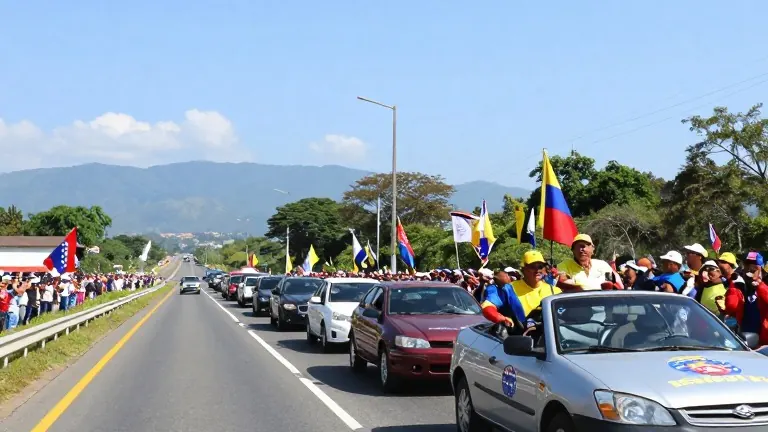
In his victory speech in São Paulo, Lula thanked the Brazilian people for their generosity. He specifically acknowledged the role of young voters who took to the streets to defend democracy. "And in this second round, I want to thank the Brazilian youth for their generosity in taking to the streets," Lula said. Celebration events in Rio de Janeiro featured supporters singing the national anthem and embracing.
Brise Pereira, a 17-year-old first-time voter in a Brasília suburb, said Lula's background as a factory worker inspired her. She viewed the election result as a message to the United States. "It's not the '90s anymore. We have rights, and Donald Trump can't speak for all of America," Pereira said. Political analyst Thiago Vidal called the result a systemic victory that spans the political spectrum, noting that the decisive margin gives Lula a mandate to govern despite a conservative opposition in Congress.
Source: KNKX Public Radio