Netanyahu Trails Eisenkot in Exit Polls as Israeli Turnout Nears 40-Year High
Opposition parties led by Gadi Eisenkot took 52 Knesset seats to 50 for the governing coalition, with final counts due Wednesday.
By Lucas Collins ·
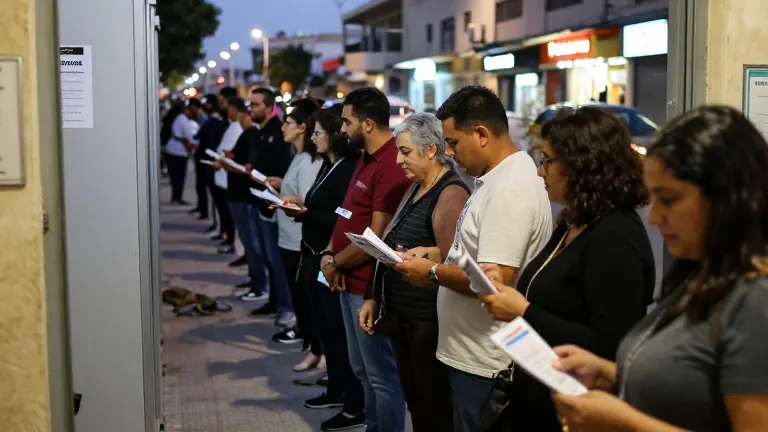
Israeli voters delivered Prime Minister Benjamin Netanyahu's coalition a slight disadvantage in exit polls Tuesday, with opposition blocs taking 52 of the 120 Knesset seats against 50 for the governing coalition, according to three major polls broadcast after voting closed at 10 p.m. local time. No bloc secured the 61 seats required for a majority, and the final count is not expected until Wednesday.
Turnout ran at the highest level in nearly 40 years, election officials said. The vote is the first parliamentary election since the October 2023 Hamas-led attack and the wars that followed in Gaza and elsewhere in the Middle East. Early exit polls gave Netanyahu's Likud Party the largest single seat count, with Gadi Eisenkot's Yashar party second.
Eisenkot, a former chief of staff of the Israel Defense Forces, led a bloc of four opposition parties. Opposition leaders said the preliminary results showed voters had moved against the coalition that has governed under Netanyahu, Israel's longest-serving prime minister with close to two decades across multiple tenures. Netanyahu posted on social media throughout the day about the number of Arab citizens of Israel voting and urged right-wing supporters to the polls.
Shira Efron, an analyst at the Rand Corp., said the returns pointed toward an Eisenkot victory. "This is a very good outcome for Eisenkot" and his recently formed party, Efron told NPR. She said the likeliest path is that Eisenkot receives the presidential mandate to form a government, either as a minority administration or in partnership with Arab politicians.
Voters interviewed at polling places split on the stakes. Naama Aaronsohn called the vote consequential for the country's direction. "I'm worried.. What's going to become of our country if there's not a major change?" Itamar Ariel, another voter, said security for Israel drove his choice and that no one can replace Netanyahu.
Nur Abu Na, a 30-year-old nurse, said the government treats Arab citizens poorly. "This government it's not good for us and .. not good for anyone," she said. Two predominantly Arab parties ran in the election.
President Donald Trump endorsed Netanyahu publicly. Trump and Netanyahu fought alongside each other against Iran in June 2025 and again in February 2026. Party leaders must now negotiate coalition agreements if neither bloc reaches 61 seats in the final count.
Daniel Estrin reported from Tel Aviv, Ruth Sherlock from Jerusalem, with contributions from Samantha Balaban, Itay Stern, Shir David and Alon Avital in Israel.
Source: KNKX Public Radio