Record Turnout Fails to Secure Majority in Israel's Fragmented Election
President Herzog calls the vote a badge of honour as Likud remains the largest party, leaving coalition negotiations uncertain.
By Thabo Hoffmann ·
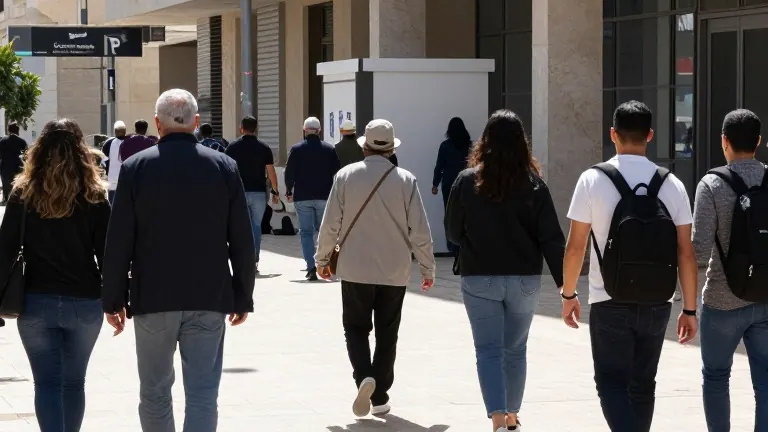
Record turnout levels among both Jewish and Arab voters marked the Israeli election on Tuesday, yet the high participation did not translate into a clear governing majority. The result leaves the country without a simple path to a new administration and forces the leaders of two opposing blocs into complex negotiations.
President Isaac Herzog described the high participation as a "badge of honour" for Israeli society. He noted the depth of democratic desire in the country, observing that some citizens spent thousands of dollars to travel abroad specifically to cast ballots. Campaigners at polling stations worked until the final minutes of voting to secure undecided votes.
Benjamin Netanyahu’s Likud party lost ground compared to previous cycles but is projected to remain the largest party in the Knesset. Netanyahu faces corruption charges, which he denies, and criticism over the government's preparation for the attacks of 7 October 2023. He has stated he will not allow that specific matter to be investigated. Despite the loss of seats, his position as the central figure in coalition talks remains strong.
The political landscape is deeply fragmented across religious, ethnic, and ideological lines. About 10% of voters supported the Jewish supremacist far right, a group that includes Finance Minister Bezalel Smotrich. Smotrich promised to establish Jewish settlements in Gaza even as the preliminary results were being reported. The ultra-Orthodox community, which now comprises almost 15% of the population, remains a distinct political force with outlooks that differ sharply from those in modern, high-tech districts like Tel Aviv.
Arab parties, representing roughly a fifth of Israeli citizens, secured about 15% of the vote. They are expected to win a number of seats in the high teens. Their strong performance is seen by some analysts as a shift in the political balance, though they must now decide whether to join a government that may be short-lived.
The opposition bloc, led by Gadi Eisenkot, failed to secure the majority needed to displace Netanyahu. This group consists of a mix of centre, left, and right-wing parties. Yair Golan, the leader of the left-wing Democrats, urged his coalition partners to work with Arab parties. He argued that Israel must stop accepting what he called Netanyahu's "racist division between Jewish votes and Arab votes."
Forming a stable government will require difficult compromises. Netanyahu must decide whether to abandon his religious allies and seek support from right-wing members of the opposition. Those opposition figures would have to overcome their hostility toward him to enter a coalition. Alternatively, the opposition could partner with Arab parties to remove Netanyahu, but this would require abandoning parts of their campaign platform.
Commentators point to long-standing social rifts that this election reinforced. Disagreements over judicial reform, the priority of saving hostages versus destroying Hamas after 7 October 2023, and military service exemptions for ultra-Orthodox men have divided the population. Amit Segal, a commentator sympathetic to Netanyahu, said the strong Arab turnout reminded Jewish voters on both sides that they may have to learn to sit together after years of division.
Herzog acknowledged the risk of a prolonged political standoff as he prepared to open negotiations. He stated that the country must do everything possible to avoid another round of elections. Coalition talks could take months and might fail entirely, which would trigger a new vote. The immediate challenge for the Knesset is bridging the gap between the two blocs without forcing a return to the polls.
Source: BBC News