Cyclone Arnab hits Andhra coast
Storm surge warnings and 180,000 evacuations mark the system's impact on India's east coast.
By Emmanuel Obasi ·
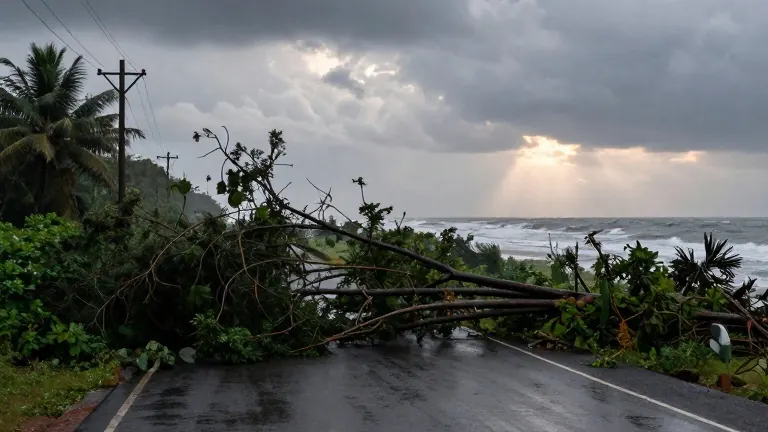
Cyclone Arnab struck Andhra Pradesh on Wednesday morning, bringing wind speeds up to 135kph and forcing the evacuation of 180,000 residents from coastal areas in Andhra Pradesh and Odisha. The storm crossed the coastline as a very severe cyclonic storm, the third-highest category on the national scale, before weakening to severe status as it moved inland. No casualties were reported immediately after landfall, but infrastructure damage and service disruptions followed the initial impact.
Meteorological data indicates the system generated a storm surge reaching 1.5m above tide level. India’s Meteorological Department warned that this surge would submerge low-lying zones in Andhra Pradesh. Authorities noted that more than 12 million people live within the storm's projected path. Power supplies were cut and trees fell across highways in the immediate aftermath of the landfall.
Transportation networks faced widespread cancellations. Flights and train services were suspended, and some schools closed their doors. A resident of Kakinada district described the uncertainty facing local communities. "No one knew whose house the water would rush into next or whose home would be submerged," the resident said. The district lies directly in the storm's trajectory, exposing homes to rapid water ingress.
The weather system extended its effects beyond the immediate coastal zone. Nepal authorities advised tourists to avoid high-altitude areas due to risks of torrential rain, snowstorms, and avalanches between Thursday and Saturday. The government suspended trekking permits for three days, a measure taken during the peak hiking season when approximately 750 hikers typically receive daily permits. Sri Lankan officials also closed schools, citing warnings from their meteorology department about potential flash floods and landslides.
The current event occurs while Nepal continues to recover from a glacial mountain collapse in August. That disaster killed more than 1,400 people and left at least 5,000 missing. Cyclone Arnab represents a new weather challenge for the region, with its path and intensity monitored closely by government agencies across South Asia.
Source: Al Jazeera