Flock Safety’s 120,000 cameras spark nine new bills in Congress
Lawmakers from both parties are introducing legislation to restrict the use of automated license plate readers, citing a lack of national oversight and constitutional concerns.
By Lucas Collins ·
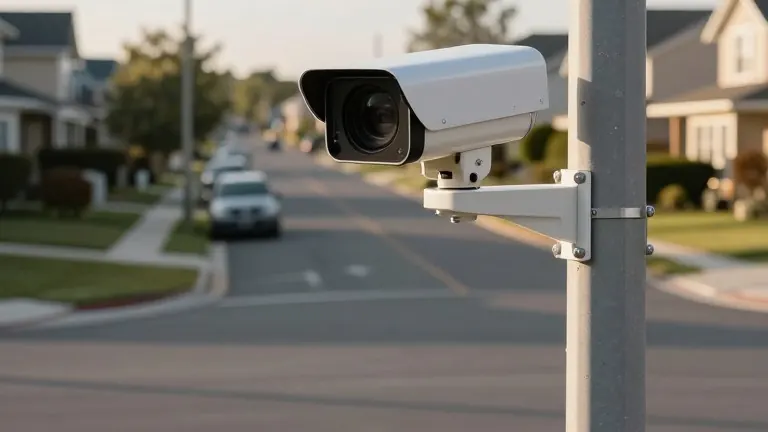
Nine legislative proposals now sit in Congress seeking to limit or ban the use of automated license plate readers. The bills respond to a nationwide network of cameras operated by Flock Safety, a company that supplies more than 120,000 devices to over 6,000 law enforcement agencies across 49 states.
Rep. Greg Steube, a Florida Republican and member of the House Permanent Select Committee on Intelligence, filed his own bill, the FLAFO Act, on October 24. The legislation would generally bar federal agencies from buying or operating networked license plate reader systems without a warrant. It includes exceptions for emergencies such as terrorism and missing persons. Steube described the current situation as a patchwork of local rules that lacks a nationwide regulatory framework.
Other proposals vary in their approach. Rep. Tim Burchett of Tennessee introduced a bill in July that would bar federal agencies from purchasing such systems. Rep. Alexandria Ocasio-Cortez of New York introduced a bill in October that would prohibit federal use unless Congress passes a specific authorization law, with a 48-hour data retention limit. Rep. Pat Harrigan of North Carolina introduced a bill in October that requires warrants for queries and mandates the deletion of records within one day.
The push for federal action follows a September Senate hearing and a year-long investigation into Flock Safety’s data-sharing practices. Critics argue that the technology allows for mass surveillance without adequate oversight. In October, a federal judge ruled that an Oklahoma officer’s warrantless use of the system violated the Fourth Amendment. The judge described the technology as a large-scale, dragnet-type surveillance system.
Flock Safety maintains that its tools help solve serious crimes and find missing people. A spokesperson for the company stated that it supports legislation that puts strong privacy and accountability guardrails in place. The company has emphasized that its revised default retention period of seven days protects civil liberties while aiding law enforcement.
Sen. Ron Wyden, a Democrat from Oregon, has urged communities to make local choices about camera placement. He noted that people are tired of having their privacy rights stomped on. Despite differing views on the level of government that should act, lawmakers agree that the technology requires clearer rules to balance security with individual liberty.
The legislative efforts aim to address concerns that the current system allows for indiscriminate tracking. Lawmakers from both parties have cited the need for transparency and accountability in how the data is collected and used. The bills represent a rare area of agreement in a divided Congress.