Democratic Surge Sets Stage for 100 Day Agenda and Hegseth Impeachment
With majorities secured in both chambers, Democrats prepare to investigate the Education Department and force a vote on the Defense Secretary.
By Emmanuel Obasi ·
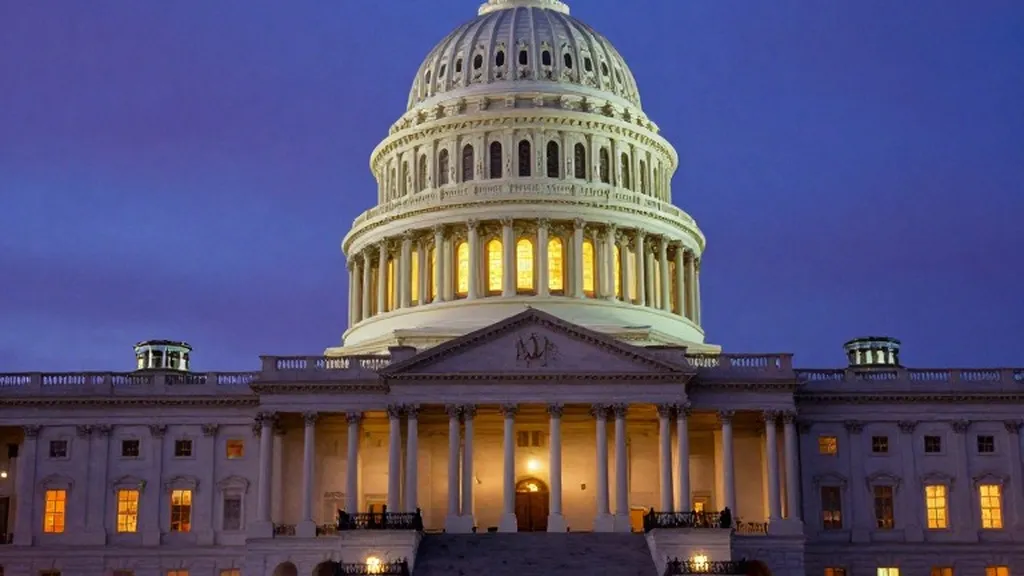
Democrats have secured majorities in both the U.S. House and Senate following the midterm elections held on November 3, 2026. According to results compiled by Ballotpedia, Democrats picked up at least 43 House seats and seven Senate seats. These gains have resulted in a House majority of at least 250 to 157 and a Senate majority of 54 to 44. The net loss of at least seven Senate seats for Republicans places this election in the top 20% of years for seat swings against a president's party. This threshold is widely defined as a wave election. While the House loss of 42 seats is short of the 48 needed for a full wave classification, uncalled races could still alter the final count.
The shift in power arrives as House Speaker Mike Johnson, a Republican, warned against impeaching Defense Secretary Pete Hegseth while the U.S. is engaged in military actions in the Middle East. Johnson stated that impeaching a Cabinet secretary during hostilities would be a terrible look for allies and enemies. He argued that the move was for political gain rather than substantive cause. However, Rep. Thomas Massie, a Kentucky Republican, moved to force a vote on impeachment as soon as the House opened for its first session after the midterms. The resolution largely focuses on the war in Iran but also references Hegseth's role in military actions in Yemen and Venezuela.
Massie described the secretary's actions as high crimes and misdemeanors that warrant impeachment. A vote in the House could come by mid-week, placing pressure on Republicans who largely blamed their election losses on the Iran war. Most House Democrats are expected to support the impeachment. Democratic Leader Hakeem Jeffries said over the weekend that it is time for the Defense secretary to go. If the House votes to impeach, the matter will next go to the Senate for a potential trial. Republicans remain in the majority in both chambers until the new Congress convenes in January with Democrats in control.
Defense Secretary Pete Hegseth maintains he is eager to litigate the military actions taken against Iran, Yemen's Houthi rebels, and Venezuela's previous leaders. He told reporters that taking issue with these operations means taking issue with the troops and what they accomplished. Hegseth announced he would hold a rare news conference on Tuesday to defend his record. This will be his first briefing in over 180 days. His last briefing was cut short as the impeachment threat loomed. He described the operations using code names Epic Fury and Rough Rider, noting that the achievements were historic.
Beyond the executive branch, Democrats are preparing to use their new majorities to oppose President Donald Trump's education agenda. Rep. Bobby Scott of Virginia, the top Democrat on the House Committee on Education and the Workforce, said he plans to leave no rock unturned. He intends to use the panel's investigative powers, including authority to issue subpoenas and hold hearings. The committee is preparing to explore the Trump administration's dismantling of the Education Department, its oversight of federal student loans, and its anti-discrimination policies. Scott sent a letter to 10 federal agencies a day after the election, reminding them to preserve records for a potential congressional review.
Sen. Elizabeth Warren of Massachusetts called on Democrats to hold the administration accountable for dismantling the Department of Education. Trump officials denounced these plans, with Education Department spokesperson Savannah Newhouse saying Democrats are plotting to prematurely sabotage Education Secretary Linda McMahon. White House spokesperson Liz Huston accused Democrats of failing students with disastrous leadership before Trump returned to office. While investigations can apply political pressure, they are unlikely to present a substantial brake on the administration's policies. Trump has pledged to veto Democratic bills he sees as harmful, limiting legislative countermeasures.
Democrats on the Senate Appropriations Committee are exploring harder checks through the budgeting process. Sen. Chris Van Hollen of Maryland said there is interest in using the power of the purse to establish guard rails. He noted that last year Democrats failed to secure broad language in a funding bill to block further dismantling of the Education Department. Now, with majorities in both chambers, they are preparing to try again. Van Hollen described this as an avenue to stop the bleeding, though he acknowledged it is harder to rebuild an entity just through an appropriations bill. He stated they can try to prevent further damage and seek to reverse the harm that has been done.
Education advocates are pushing Democrats to go further by conditioning federal funding. Some hope to see appropriations language ordering the administration to reverse decisions moving Education Department functions to other agencies. This includes a move that put special education programs under the Department of Health and Human Services and another that placed the investigation of school discrimination claims under the Justice Department. Aaron Ament, president of the advocacy group Student Defense, said it is becoming apparent that the administration does not have the authority to keep dismantling these offices. His group is representing plaintiffs in a lawsuit challenging the dismantling of the Education Department.
The election results also reflect broader trends in state government. Democrats won a majority of governorships for the first time since before the 2010 elections. They also won a plurality of state government trifectas and state legislative chambers. In California, Xavier Becerra became the state's first elected Latino governor. His win marks the fifth consecutive Catholic governor in the state. Becerra's campaign highlighted the complex relationship between Catholic faith and progressive politics in the state. About 6 in 10 Catholic voters supported Becerra, while about 4 in 10 voted for his Republican opponent Steve Hilton. Latino Catholics showed stronger support for Becerra, with about 7 in 10 voting for him.