Democrats take House, confirming Johnson's warnings of DSA control
The Speaker's pre-election op-ed and interviews predicted a chaotic two years; Republicans cite a record of tax cuts and border security as they cede the gavel.
By Emmanuel Obasi ·
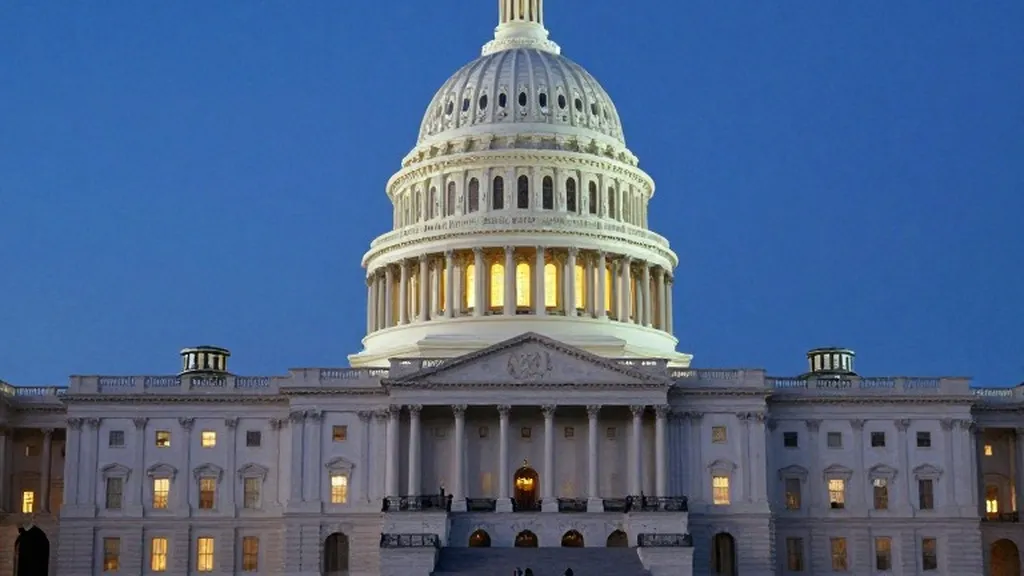
Voters on Tuesday, November 3, 2026, delivered a decisive shift in power, electing Democrats to majorities in both the U.S. House and the Senate. According to Ballotpedia, Democrats won at least 250 House seats and 54 Senate seats, marking a significant loss for the party of President Donald Trump. This outcome ends the three-year tenure of House Speaker Mike Johnson, who spent the final weeks of the campaign warning that a Democratic House would be held hostage by the party's far-left wing. The new congressional majority will convene in January to begin a session that many conservatives expect to be marked by intense oversight and legislative conflict.
Speaker Johnson, a Republican from Louisiana, framed the election as a choice between building and destroying the foundations of the nation. In an op-ed published in USA Today on October 30, he argued that the Democratic Party had bent the knee to a far-left socialist insurgency. He stated that even a narrow Democratic House would be held hostage by the Democratic Socialists of America, or DSA. Johnson noted that party leaders were welcoming these candidates into their big tent, ceding unprecedented power to a cadre whose stated aim is to remake the party and end the free market system.
The Speaker highlighted the DSA platform as a preview of the agenda to come. He pointed to calls for eradicating borders and prisons, granting mass amnesty to illegal immigrants in perpetuity, and abolishing the Senate. Johnson also cited the proposal to replace both the presidency and the Supreme Court with an executive and judiciary handpicked by a DSA-run Congress. He described this shift as a move from the old-guard Democrats to a group that seeks to dismantle the American system rather than preserve it.
Old-school Democratic strategist James Carville reinforced this concern in public remarks. Johnson quoted Carville as admitting he would rather Republicans keep the House than have Democrats win by five seats. Carville’s reasoning was that his party would be hostage to the DSA in such a slim margin. Johnson agreed with this assessment, arguing that the chaos unfolding in France serves as a dark harbinger of what could happen in the United States if Democrats gain control. He described the French crisis as the inevitable result of decades of misguided policy choices, including lax immigration and suffocating regulation.
During an interview on The Ingraham Angle on Fox News, Johnson painted a vivid picture of the next two years. He told viewers that it would be chaos every day for two years in the next Congress under Democratic leadership. He warned that the new majority would go after retribution against President Trump and his administration. He predicted they would try to open those borders wide and repeal the Working Families Tax Cut and all that we’ve done for the economy. Johnson emphasized that every vote would count, noting that in 2024, ten House races were decided by 6,000 votes or less.
In another appearance on Fox and Friends, Johnson contrasted the Republican record with the Democratic agenda. He said Republicans delivered on their promises in 2024 by bringing down costs and cutting taxes with the largest tax cut in U.S. history. He claimed they made streets safer and were returning to American energy dominance. Johnson stated that Democrats voted against all of that and that people are looking at record over rhetoric. He described the Democratic platform as one that wants to abolish borders, abolish prisons, and defund the police and the Department of War.
Republicans are leaving office with a list of accomplishments they say justify their tenure. According to the Speaker’s office, House Republicans delivered 4.6 trillion dollars in lower taxes, which they describe as the largest middle- and working-class tax cut in history. They also secured a 1.6 trillion dollar reduction in wasteful government spending. The party points to a totally secured border, the lowest violent crime rate in 126 years, and the largest decline in prescription drug costs in 60 years. These results were achieved while navigating one of the smallest House majorities in history.
Johnson also highlighted the creation of the first-ever nationwide school choice program and the launch of Trump Accounts for children born between 2025 and 2028. He noted that more than one million private-sector jobs were added to the economy, and American manufacturing is reshoring due to pro-growth policies. He mentioned that Democrats forced three government shutdowns, including the longest in U.S. history, yet Republicans still delivered historic results. This resilience, Johnson argued, demonstrates the effectiveness of the Republican legislative strategy.
The new Democratic leadership is already preparing to use its oversight and appropriations powers to check the Trump administration. Rep. Bobby Scott of Virginia, the top Democrat on the House Committee on Education and the Workforce, said he plans to leave no rock unturned as he takes the helm of the panel's investigative powers. He intends to explore the administration's dismantling of the Education Department and its oversight of federal student loans. Sen. Elizabeth Warren of Massachusetts called on Democrats to hold the Trump administration accountable for turning its back on students.
Despite the Republican claims of a strong record, the election results suggest voters prioritized economic concerns and a desire for checks on the presidency. The AP Voter Poll found that three-quarters of voters say the economy is not so good or poor, and about 8 in 10 say inflation has caused a severe or moderate financial hardship. Government corruption was also cited as a crucial issue by roughly half of voters. As the new Congress prepares to convene, the focus will shift to how the Democratic majority implements the agenda that Johnson warned would be a harbinger of change.