Tesla Targets 20,000 Weekly Robot Output at Fremont
The company plans to use 10,000 to 20,000 units in an internal academy to generate training data for its new hardware.
By Thabo Hoffmann ·
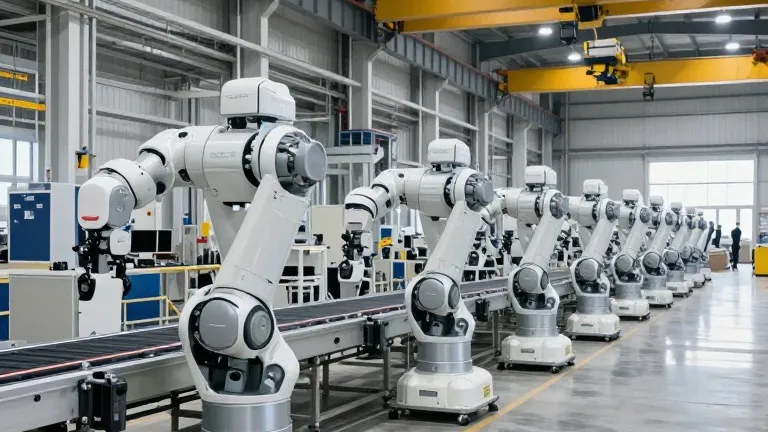
Tesla aims to produce 20,000 Optimus robots per week at its Fremont, California facility as it ramps up serial manufacturing. The company confirmed on Wednesday that the units coming off the line meet commercial product standards. This output level represents a capacity designed for one million units annually.
The robot assembly line occupies space previously used for Model S and Model X production. Tesla removed the old vehicle line in 46 days this spring to make room for the new setup. Elon Musk stated on the quarterly earnings call that most equipment for the target capacity is already installed in Fremont. The company expects output to climb toward the 20,000 weekly figure as operations scale.
Musk described the production growth as following an S curve with a shallow initial slope. The team is currently refining the robot's AI, electromechanical design, reliability, and service life. Tesla plans to complete this work by the end of next year. The company intends to begin delivering Optimus units to outside firms for dangerous, repetitive, and around-the-clock tasks at that time.
A major technical challenge involves generating training data for the robots. Unlike Tesla's cars, which send driving data from millions of vehicles, Optimus lacks a large existing fleet. Musk noted that the company does not have a vast fleet of robots to gather training data from. Tesla's solution is an internal program called the Optimus Academy.
The Academy will use 10,000 to 20,000 robots to practice a wide range of tasks. These units will feed what they learn into the next version of the model. Every robot produced on the Fremont line serves as a source of this training data. This approach allows the AI team to improve performance without waiting for external deployments.
Hardware upgrades are also scheduled for next year. Tesla plans to integrate its AI5 chip into the Optimus platform. Musk said a new video demonstrating the robot completing tasks driven by AI rather than preprogrammed motions will arrive within one or two months. He contrasted this approach with rival humanoid demos that rely on scripted routines, asserting those would not hold up in real-world conditions.
The third quarter shareholder letter marked the robots from the new line as the first production-quality units manufactured by Tesla. The letter added that the company has proven the current manufacturing process is suitable for a commercial product. The shift marks a move from prototype development to high-volume industrial output.
Source: Teslarati
More Business · Tech news · Consumer Watch · Report a business · Got a Story?