Tesla’s Strategic Pivot: Building Internal Maps to Correct FSD’s Core Navigation Flaws
After years of rejecting external cartography, Tesla is developing a proprietary mapping system driven by its vehicle fleet to address persistent errors in speed limit recognition and routing.
By Thabo Hoffmann ·
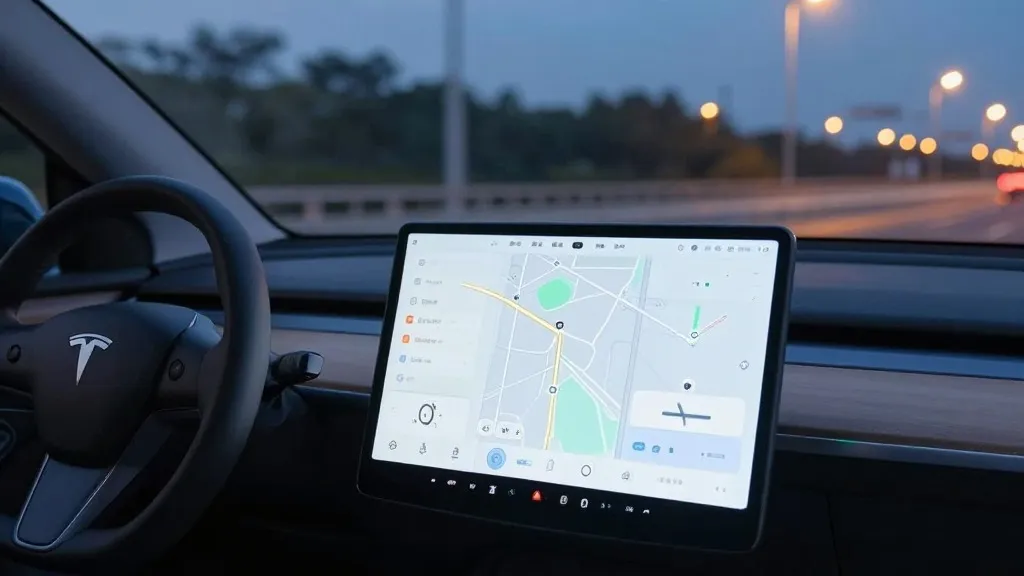
Tesla has officially acknowledged that its Full Self-Driving software requires a proprietary mapping layer to resolve persistent operational errors, marking a significant departure from the company’s long-standing rhetoric against reliance on external cartography. This admission, made during the third-quarter 2026 earnings call, signals that the company’s vision-based system is insufficient for handling fundamental road information without the support of data generated by its own fleet. The shift underscores a growing consensus in the autonomous vehicle industry that even advanced neural networks benefit from structured environmental data.
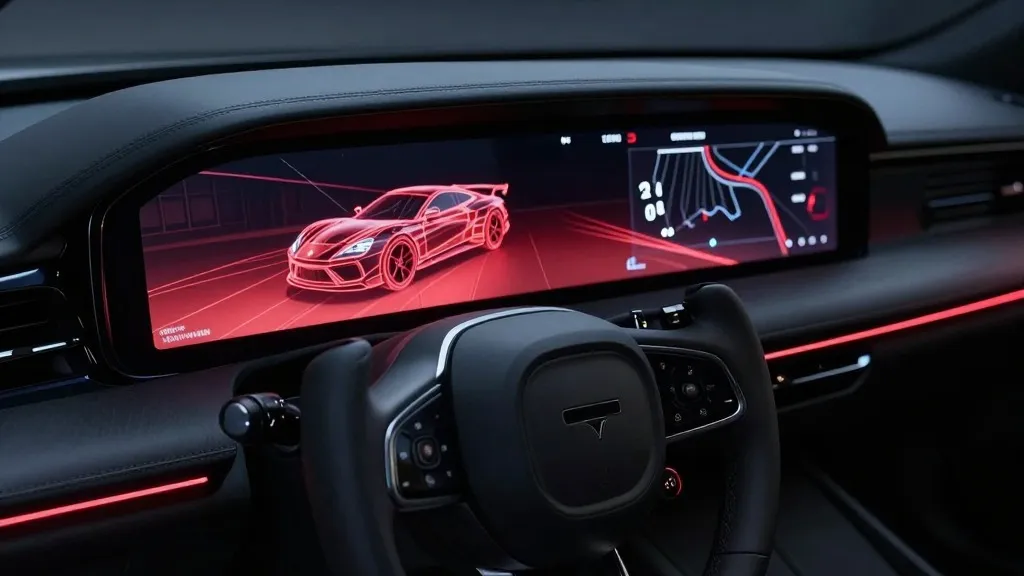
The decision to build internal maps is a direct response to specific failures in the current FSD architecture, particularly regarding speed limit identification, parking logic, and route selection. These issues have been identified as the most common complaints from users and have drawn regulatory attention. By constructing a map from the collective data of its vehicles, Tesla aims to create a dynamic environment model that supplements its camera feeds, ensuring the system has accurate baseline information about road infrastructure rather than relying solely on real-time visual interpretation.
Tesla’s Vice President of AI, Ashok Elluswamy, confirmed the initiative during a shareholder Q&A session, stating that the company should not depend on third-party maps. He described a new AI-based architecture that leverages fleet data to build these maps, which will also integrate individual driver preferences and voice command responses. The rollout is staged, with the technology initially managing the start and end of trips in FSD version 15 before expanding to handle broader navigation and destination management in subsequent updates over the coming months.
This development represents a notable reversal for a company that previously dismissed map-based driving as brittle. In 2019, CEO Elon Musk criticized high-precision lane maps as a "really bad idea" that made systems overly fragile, contrasting this with Tesla’s approach of using cameras and AI to drive anywhere. At the time, he also labeled lidar a "fool’s errand." However, the company had hinted at mapping efforts as early as 2015, claiming to build high-precision maps with significantly greater granularity than standard navigation tools using customer data.
The need for this map layer is highlighted by recent performance data from FSD deployments. A Belgian road safety group found that the system exceeded speed limits in 55% of 30 km/h zones in Brussels, often displaying incorrect limits on the dashboard. In the United States, the NHTSA is considering an investigation into whether Tesla Robotaxis speed through active school zones, a concern involving approximately 1,000 Model Y and Cybercab vehicles. These incidents suggest that the vision system struggles with consistent environmental understanding, a gap that a dedicated map is designed to fill.
The new strategy brings Tesla’s operational model closer to that of its competitor, Waymo. Waymo has long used sensor-equipped vehicles to map cities before launching service, maintaining those maps through continuous fleet driving. While Tesla’s approach differs in that it does not currently use lidar for mapping, the fundamental concept of using a fleet to build and update a shared environmental model is identical. This aligns with Tesla’s current Robotaxi operations, which function within geofenced service areas where the company manages fleet operations directly.
The stakes for Tesla extend beyond technical performance to its broader market positioning. The company has marketed FSD as a general-purpose solution capable of operating anywhere through vision alone. By now admitting the need for a map layer, Tesla concedes that a hybrid approach is necessary for reliable performance. This move may influence consumer expectations and regulatory scrutiny, as it suggests that the path to unsupervised driving involves a combination of AI perception and curated environmental data, rather than pure visual processing.
For investors and industry observers, this pivot validates the utility of fleet-generated data as a competitive advantage. While every serious autonomous driving program utilizes maps, Tesla’s ability to leverage millions of vehicles to build and refine this data in real-time could provide a distinct edge. The success of this initiative will determine whether Tesla can close the performance gap in critical areas like speed limit compliance, potentially smoothing the path for wider deployment of its unsupervised driving features.
Source: Electrek · original report published