Serbia's Student List wins 48% in vote ending Vucic's 14-year rule
A leaderless movement built on university occupations and direct democracy has secured the mandate to form a government, facing immediate tests in trade and foreign policy.
By Lucas Collins ·
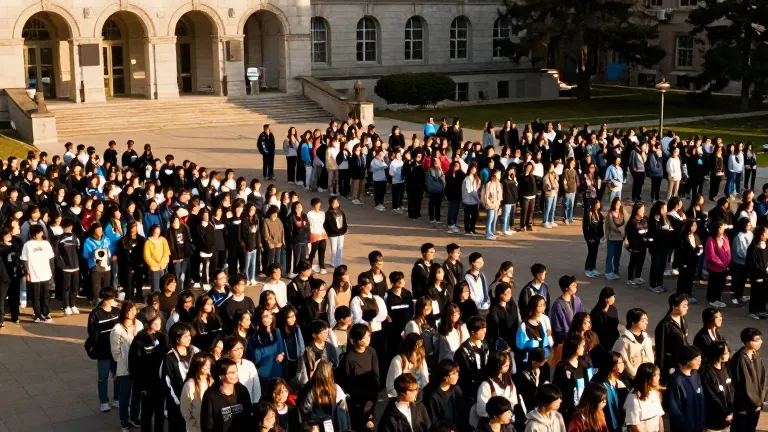
Voters in Serbia rejected President Aleksandar Vucic and his long-standing rule on Sunday, electing a student-led coalition that has promised a radical shift in the country's political and economic direction. The Student List, a grouping that operated without a single frontperson, defeated the governing party to secure a mandate for government negotiations. This outcome marks the end of a fourteen-year tenure for Vucic, who had previously outmaneuvered traditional opposition groups for over a decade.
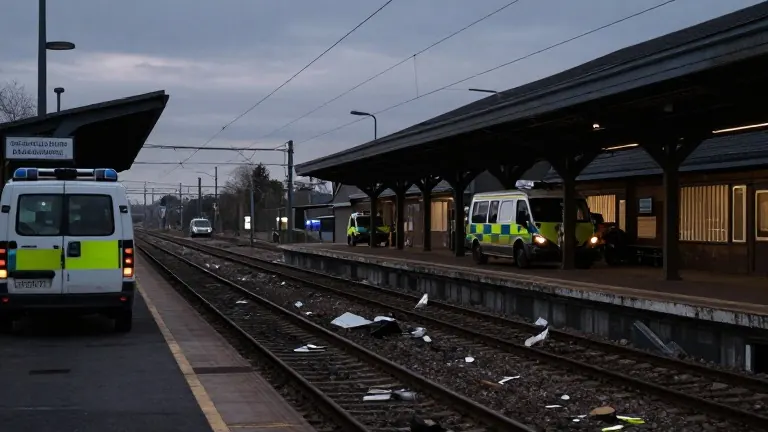
The movement's rise began in 2024 following the collapse of a train canopy at a newly renovated station, an incident that killed 16 people. While that tragedy served as the catalyst, the underlying grievances were economic. Students and their families faced rising costs due to local elite corruption and low-wage jobs offered by foreign corporations. The movement distinguished itself by remaining independent of the four major powers influencing Serbia: Russia, China, the European Union, and the United States.
For two years, students blockaded universities across the country, bringing higher education to a standstill. They established self-governing structures within occupied faculties, managing food supplies, medical care, and administration independently. At the Faculty of Technical Sciences in Novi Sad, which enrolls more than 16,000 students, guards controlled entrances with metal fencing and communication equipment. LED screens in corridors announced plenaries and alternative lectures, replacing standard academic schedules with political and economic debates that often lasted five or six hours.
The movement relied on direct democracy rather than traditional party hierarchies. By March 2025, students urged the wider public to form citizens' assemblies to aid their demand for justice regarding the station deaths. This decentralized approach allowed the group to withstand police eviction attempts and maintain public support. When the students eventually entered the electoral arena, they applied the same principles of transparency and collective decision-making used during the protests.
Electoral candidates were selected through a rigorous process that excluded established politicians. The Student List chose academics and activists who had previously engaged with the student body. In one interview session near Novi Sad, a group of 300 students questioned each candidate while keeping their phones outside the room. The final list featured an equal distribution of men and women across various university regions, reflecting a deliberate rejection of leader-based politics.
The new government faces immediate challenges in reversing the economic and political structures built over the last decade and a half. A primary test involves Serbia's relationship with Israel. The Student List's electoral programme condemns the genocide in Gaza and states the government will not be complicit in it. Under Vucic, arms exports to Israel increased from $3.3 million in 2023 to $126 million in 2025. In September 2026, Vucic also opened a factory for the production of Israeli drones.
If the new administration adheres to its platform, it must halt these arms exports. This decision would extend political change into the economic sphere, potentially unsettling Serbia's foreign relations and challenging its position in the geopolitical order. The move risks provoking resistance from domestic interests in the arms industry and pressure from foreign partners who rely on Serbia's strategic neutrality.
External observers are already weighing in on the transition. US-based conservative influencers framed support for Vucic during the final days of the campaign as a defense of Serbia's Christian identity against perceived Islamic influences. Meanwhile, the Conservative Political Action Conference, a US-based organization, plans to open a Serbian chapter in November 2026, with Vucic expected to play a central role in the launch.
The Student List has begun negotiations to form a government. The group must now manage tensions between its domestic mandate and the expectations of international powers while navigating the complex legacy of the previous administration's foreign policy choices.
Source: Al Jazeera