Eight killed, 27 hospitalized after three gunmen strike Karak church
Jordanian security forces are searching for the unidentified assailants who attacked a Greek Orthodox funeral service in the village of Hamoud on Friday.
By Lucas Collins ·
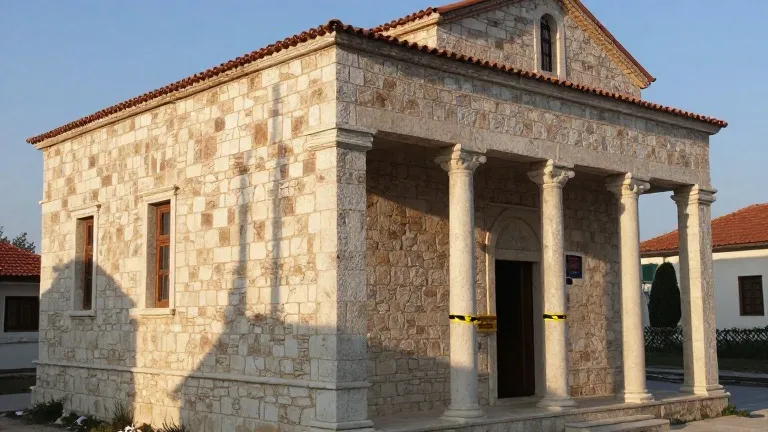
Jordanian security forces are searching for three unidentified gunmen who attacked a Greek Orthodox church in the Karak governorate on Friday. The assault occurred during a funeral service in the village of Hamoud, resulting in eight deaths and dozens of injuries.
The country's Ministry of Health reported that seven people died at the scene and an eighth, a woman, succumbed to her injuries hours later. Of the 40 individuals wounded, 27 remain hospitalized. A director at Prince Ali Military Hospital in Karak stated that one patient is in critical condition following surgery.
Survivors described the sequence of events as beginning with an explosion shortly after the service started. Two attackers arrived in a vehicle, and a third man joined them carrying a semi-automatic rifle. The three men entered the church and fired for several minutes. Nasser al-Burqan, a lawyer who survived the shooting, told Reuters that one attacker stood approximately two meters away and fired a handgun at him. His son, who was also present, was shot in the leg and transported to a hospital. Tarek Ammarin, who was visiting an injured relative, described the incident as a massacre.
King Abdullah II offered condolences to the victims' families and ordered a review of the kingdom's security procedures for responding to terrorist attacks. The monarch stated that those responsible would face the harshest penalties. Prime Minister Jafar Hassan declared three days of national mourning, ordering flags to fly at half-mast on government buildings. He characterized the attack as a product of terrorist ideology and blind extremism. Interior Minister Mazin Al-Farrayeh attributed the violence to a group of extremists but did not name a specific organization.
The Karak governorate is located approximately 120 kilometers south of Amman. The region is home to a large portion of Jordan's roughly 300,000 Christians within a national population of 11.5 million. Taylor Luck, a senior Middle East correspondent for the Christian Science Monitor, noted that Christians and Muslims have lived side by side in Karak for generations. He observed that the community is likely to emerge stronger if the attack was intended to cause division.
International reactions have included condolences from the United States embassy and condemnations from Azerbaijan, Iraq, Poland, Palestine, and Qatar. Ahmed al-Tayeb, grand imam of Cairo's Al-Azhar, labeled the event a heinous terrorist attack. Security camera footage broadcast by the state channel Al-Mamlaka showed the three individuals firing outside the church and at a group of men attempting to flee the area.
Attacks on religious sites in Jordan are infrequent, although violence has occurred in the region previously. In 2016, the ISIL group executed a series of attacks in Karak, including a siege on a Crusader-era castle that killed 10 people, among them a Canadian tourist and seven police officers. Jordanian security forces later killed four attackers following a standoff.
Source: Al Jazeera