Democrats Seize Both Chambers as GOP Loses Control of Congress
The historic shift leaves Republicans with a narrow minority in the Senate and a significant loss in the House, marking a major setback for the administration.
By Emmanuel Obasi ·
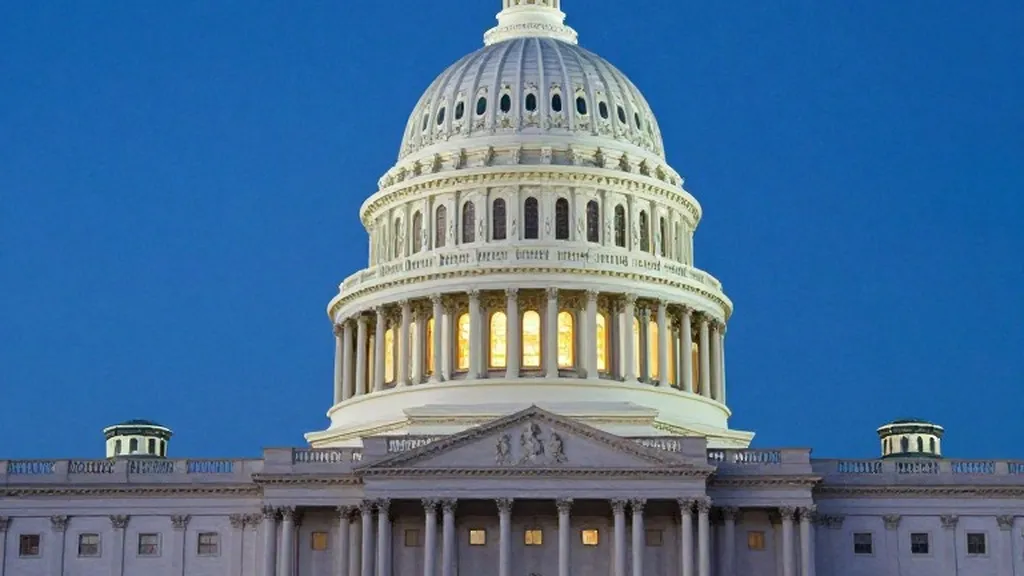
The midterm elections of November 3, 2026, have resulted in a decisive transfer of power to the Democratic Party in the United States Congress. According to verified results compiled as of 4:00 PM ET on November 6, Democrats have secured majorities in both the Senate and the House of Representatives. This outcome ends the Republican control of the legislative branch and places the administration in a position where it must negotiate with a Democratic-led Congress on future legislation and budgetary matters.
In the Senate, the Democratic Party has captured at least seven seats that were previously held by Republicans. With the current tally, Democrats hold at least a 54-44 majority in the upper chamber. This net loss of seven seats represents a significant swing against the president's party, placing this election cycle in the top 20% of historical election years in terms of seat changes. The shift in control means that the Democratic leadership will now set the legislative agenda and committee assignments in the Senate, giving them substantial influence over the confirmation of judicial and executive appointments.
The House of Representatives saw an even larger shift in partisan control. Democrats picked up at least 43 seats from the Republican majority. Of these, 42 were previously held by Republicans and one was held by an independent. As of the latest reporting, Democrats hold at least a 250-157 majority in the lower chamber. Although the Republican net loss of 42 seats is short of the 48 seats typically required to define a full wave election by some standards, the scale of the defeat remains one of the most significant in recent history. Uncalled races could still alter the final total, but the Democratic majority is firmly established.
President Donald Trump reacted to the results by initiating a major shake-up in his administration. On Friday, the president announced that he would replace longtime adviser Susie Wiles with Stephen Miller to serve as the next chief of staff. Miller is known as the architect of the administration's hard-line immigration policies and is considered one of the most determined figures in the president's inner circle. This change signals a potential shift in the administration's priorities as it prepares to work with a Congress that is now controlled by the opposition party.
The transition at the top of the White House has been marked by rapid personnel changes. The post of press secretary, which had been vacant since Karoline Leavitt left at the end of August, remains open. Trump recently tried out Katie Zacharia in the role, but she left the position after only five days. On Saturday, the president announced on social media that he had offered the job of White House press secretary to UFC boss Dana White. White, who is a close friend of the president, shared an image of himself at the White House podium with the caption "On to the next chapter," though he was in London for a boxing event at the time of the announcement.
Beyond the federal level, the elections produced significant changes in state governments. Democrats won a plurality of state government trifectas and state legislative chambers. For the first time since before the 2010 elections, Democrats won a majority of governorships. In the 36 gubernatorial races held, Democrats won 22 and Republicans won 12. Two races remained uncalled, but five seats changed party control, all from Republicans to Democrats. This shift in executive power at the state level will likely influence policy implementation and election administration in key states over the coming years.
The results in state legislatures further solidified the Democratic gains. Democrats won 46 of the 88 state legislative chambers on the ballot, while Republicans won 39. One chamber went to a bipartisan coalition, and two remained uncalled. Notably, twelve state legislative chambers changed party control, with all twelve shifting to Democratic control. This broad-based victory across statehouses suggests that the shift in voter sentiment was not limited to federal offices but extended to local and state governance.
The election also saw changes in other triplex offices, which include the governor, the state legislature, and the state supreme court or equivalent. In 36 of the 39 states where these offices were on the ballot, Democrats won 20 triplexes, Republicans won 11, and five states will have divided governments. Three states' triplex statuses remained undecided. Six states changed status, with two shifting from Republican triplexes to Democratic triplexes and one shifting from a divided government to a Democratic triplex. Three other states shifted from Republican triplexes to divided governments.
In the race for attorney general and secretary of state, Democrats also made substantial gains. Democrats won 21 of the 34 attorney general races, while Republicans won 10. Three races remained uncalled, all of which were previously held by Republicans. Three offices changed party control, all to Democrats. In the secretary of state races, Democrats won 21 and Republicans won 11. One race, previously held by Republicans, remained uncalled. Six offices changed party control, all to Democrats. These positions are critical for election administration and legal oversight, and the shift to Democratic control will have lasting implications for how elections are managed in those states.
The Mississippi U.S. Senate race remains a focal point of the post-election period. Democrat Scott Colom has not yet been declared the winner, but the state is still tallying ballots that could make him the first Black senator from the state since Reconstruction. The contest is too close for the Associated Press to call, and local officials are receiving and examining absentee and provisional ballots. Colom has stated that ballots tallied since Tuesday lean in his favor, while incumbent Republican Senator Cindy Hyde-Smith has declared that the election is not over and that her team is monitoring the remaining ballots. The final outcome in this race could further impact the partisan balance in the Senate.