Amtrak Cascades Ticket Times Will Change as British Columbia Keeps Daylight Saving
Cross-border rail travelers between Seattle and Vancouver will see adjusted ticket times starting November 1 due to a permanent time shift in the province.
By Thabo Hoffmann ·
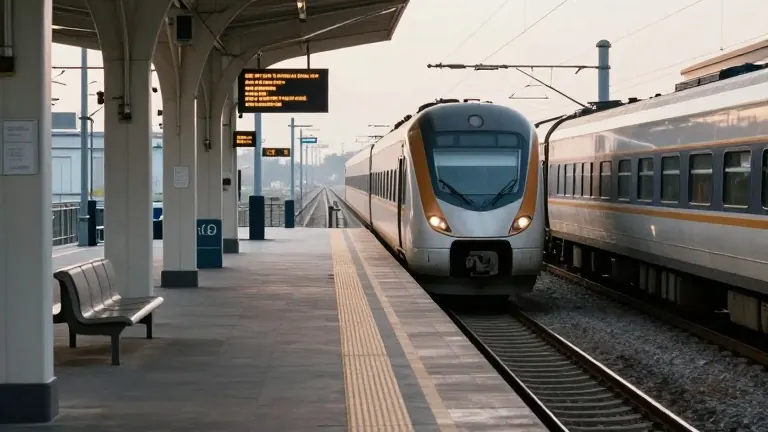
Amtrak Cascades will alter ticket times for passengers traveling between the Pacific Northwest and British Columbia beginning Sunday, Nov. 1. The change occurs because Washington and Oregon residents will set their clocks back one hour, while the province of British Columbia will retain its current time setting. This creates a temporary one-hour difference between the two regions.
The adjustment stems from a policy shift in British Columbia that ended the province's participation in seasonal clock changes. The province adopted permanent daylight saving time last year, a move that aligns with a legislative change passed in 2019. Regulations for this new standard took effect in March 2026. By keeping clocks ahead year-round, the province aims to simplify scheduling and provide more evening light during winter months.
For Amtrak Cascades customers, the time zone split affects how travel durations appear on tickets. Southbound trips from Vancouver to Seattle will display as three-hour journeys. Northbound trips from Seattle to Vancouver will show as five-hour journeys. The actual physical travel time remains approximately four hours for both directions. The ticketing system reflects local departure and arrival times for each specific city.
The service operates two daily roundtrips to Vancouver's Pacific Central Station. One route originates in Seattle, and the other starts in Portland, Oregon. Onboard crews will announce the time difference to help riders adjust their personal devices. The discrepancy will last until the United States resumes daylight saving time on the second Sunday in March, when the regions will synchronize again.
Janet Matkin, a communications official for Amtrak Cascades, stated in an advisory that this procedure is standard for crossing time zones. She noted that tickets will reflect the departure time at the origin city and the arrival time at the destination city, similar to domestic U.S. travel across different time zones. Provincial officials in British Columbia described the change as a step to improve public health and reduce family disruptions.
The time zone change also affects communities within British Columbia. Most of the province will operate permanently at UTC-7, labeled as Pacific Time. However, specific areas will maintain different standards. Communities in northeastern British Columbia, such as Dawson Creek and Fort St. John, will remain on Mountain Standard Time (UTC-7), which naturally aligns with the new Pacific Time standard. Several municipalities in the southeast, including Cranbrook and Fernie, will observe Mountain Daylight Time (UTC-6) year-round.
Transit officials have not yet determined if connecting bus services or regional airlines will adjust their published timetables beyond local station conventions. The initial winter transition serves as a test for the long-term impact on cross-border commuter freight and trade corridors. The schedule change takes effect immediately as clocks are set back in the United States.
Source: KZJO