EU Leaders Set to Press UK for Larger Ukraine Role Amid 2027 Funding Deficit
Brussels officials intend to request increased British financial contributions to Kyiv during upcoming summit talks as the bloc seeks to balance its growing share of defense costs.
By Emmanuel Obasi ·
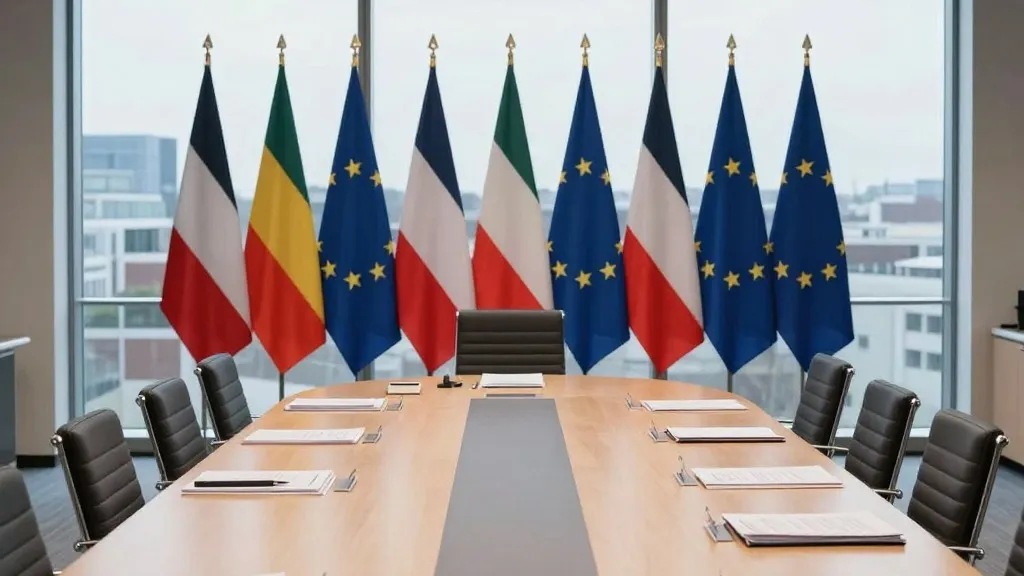
European Union leadership officials plan to formally request that the United Kingdom expand its financial assistance to Ukraine during a summit scheduled for next month. The European Commission intends to argue that Britain, along with Canada and Japan, should assume a greater burden in supporting Kyiv's defense and civilian needs. This diplomatic push comes as Brussels seeks to address a significant gap in funding projected for the coming fiscal year.
The core of the argument rests on the belief that previous requests for additional aid from these G7 nations have not yielded sufficient results. Ursula von der Leyen, the President of the European Commission, will extend a similar invitation to Canadian Prime Minister Mark Carney during a separate meeting in Montreal. Her strategy involves a coordinated effort to secure commitments from major non-European allies to help stabilize Ukraine's economic position.
The timing of these discussions presents a complex challenge for the British government. Chancellor John Healey is currently preparing the nation's first budget of the year, a process that requires balancing the need for increased spending against the backdrop of rising borrowing costs and a cautious economic outlook. Healey has previously noted that his team is exploring various methods to enhance support for Ukraine, including through military, diplomatic, and economic channels.
Ukraine estimates that it faces a funding shortfall of approximately €70bn in 2027 to meet its defense and civilian requirements. The European Commission indicates that the EU and its member states currently cover 80% of these costs. Brussels considers a fair share for the EU to be two-thirds of the total, with the remaining portion to be covered by other international partners. Von der Leyen stated that while the EU intends to continue leading the effort, it urgently requires other partners to contribute more significantly.
The financial landscape has shifted due to Russia's continued escalation of attacks, which has pushed the conflict into its fifth winter. As a result, Ukraine's expenses have continued to rise beyond initial projections. Although the EU agreed to a €90bn loan last year to cover a portion of Kyiv's needs for 2026 and 2027, the current trajectory suggests that additional resources are necessary. Officials are primarily focusing on the UK, Canada, and Japan, but they are also considering approaching Switzerland, South Korea, Australia, and New Zealand for supplementary aid.
The British government maintains that it has committed £25bn to Ukraine, a figure that includes £16bn in military assistance. According to data from the Kiel Institute, the UK is the fourth largest donor to Ukraine, trailing only the United States, Germany, and France. However, when contributions are weighted by national income, the UK's share stands at 0.86% of GDP. This compares to 1.1% for France and 1.5% for Germany, while smaller nations like Denmark and Estonia contribute significantly higher percentages.
Analysts note that the UK's relative standing improves when its contributions to broader EU programs are excluded. In that context, British support aligns more closely with that of France and Germany. This distinction may form part of the negotiation dynamics as Brussels attempts to justify its request for a larger direct contribution from London.
The November summit will also address several other critical issues related to post-Brexit relations. Leaders are expected to finalize three key agreements: a food and animal health deal to reduce administrative burdens, a linkage of emissions trading schemes to protect British industry from European carbon taxes, and a youth mobility scheme for those aged 18 to 30. These arrangements are designed to facilitate trade and movement across the Channel.
A notable development in the negotiations involves the issue of university tuition fees, which has been a significant point of contention. The European Commission has proposed deferring this decision to technical discussions to be held within six months of the summit. This move is intended to prevent the fee dispute from derailing the broader agreement. The UK prefers to charge EU students the international rate, while the EU seeks to restore the pre-Brexit status quo where EU students paid domestic fees.
Senior EU sources indicate confidence in maintaining leverage over the negotiations. They argue that the food and emissions deals will not take effect until a youth mobility agreement is reached, including on the matter of fees. One EU diplomat described the proposed packages as a significant benefit for the UK, while another noted that there is no clear majority among member states willing to drop the issue immediately. This suggests that the question of tuition will remain a central factor in the final outcome of the talks.
Source: The Guardian