Youth Turnout Outpaces US in Tuesday Knesset Election
A new cohort of voters aged 18 to 22 could decide up to 12 seats in the 120-member Knesset.
By Thabo Hoffmann ·
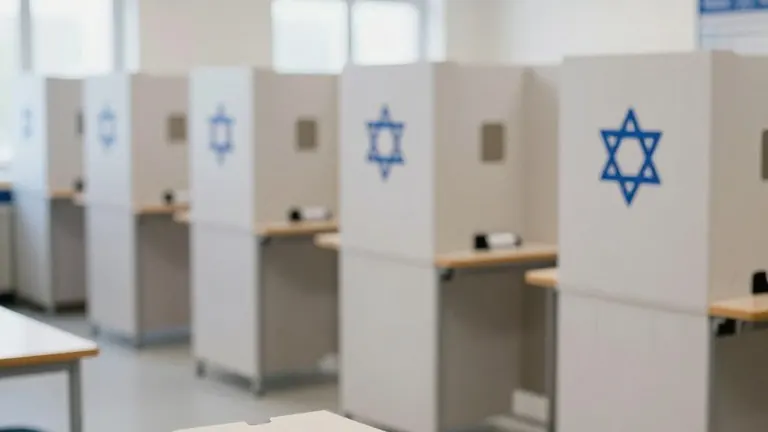
Six hundred forty thousand Israelis aged 18 to 22 are eligible to cast ballots in the general election scheduled for Tuesday, October 27. The Israel Democracy Institute estimates this group constitutes nearly 10 percent of the total electorate. Their collective choice could determine as many as 12 seats in the 120-member Knesset.
The potential impact of this demographic is high. Tammy Hoffman, head of the education policy program at the Institute, noted that Israel has a high birth rate. Her research indicates that if turnout remains high, first-time voters will make a difference in the final tally. In May, the Institute surveyed potential young Jewish and Arab voters. Across all population groups, 80 percent to 95 percent said they would definitely or likely vote. Secular Jewish youth expressed the highest certainty, while 87 percent of Arab respondents said they intend to participate.
This level of engagement exceeds international benchmarks. In the United States, youth turnout in the 2024 presidential election was only 47 percent, according to the Center for Information and Research on Civic Learning and Engagement. A separate poll by Ynet and Yedioth Ahronoth confirmed high motivation among Israeli youth. Sixty-seven percent of respondents aged 18 to 22 said they were certain they would vote, while another 19 percent thought they would.
National security and the cost of living emerged as the top priorities for both Jewish and Arab young people in both polls. Hoffman attributed this focus to the unstable environment these voters have experienced during their adolescence. They were in junior high during the pandemic, witnessed the judicial reform protests, and experienced the events of October 7. Hoffman noted that military service does not automatically lead to a nationalist stance. It can also raise questions about war goals. While Jewish Israeli voters have moved rightward over the past decades, Arab Israelis have not shifted right but are more eager to vote than in previous elections.
A September 23 N12 poll found that 74 percent of young people described their political views as right-wing or center-right. Twenty-three percent identified as left-wing or center-left. If the election were held then, 16 percent would vote for Yashar, the party led by Gadi Eisenkot, while 14 percent would vote for Benjamin Netanyahu's Likud. Despite assumptions about youth preferences, Hoffman pointed to mock elections in high schools. The majority of students in those simulations voted for Yashar and Beyachad, the party led by Naftali Bennett and Yair Lapid.
Individual voters expressed mixed motivations. Omer Gross from Jerusalem, who is in an army-prep program in the Golan, plans to vote for the Religious Zionist party. He supports Finance Minister Bezalel Smotrich's policies in the West Bank despite disagreeing with his approach in Gaza. Tomer Shiloh from Herzliyah, attending the same program, will vote for the opposition Change bloc. He wants the next government to lower the cost of living and require Haredi young men to serve in the Israel Defense Forces. Sgt. M, a 22-year-old reserve officer, is voting for the Democrats party primarily for economic reasons. He cited the high cost of tuition, housing, and books as barriers to his education.
Khalel Alaa Sabeh, an 18-year-old from Shefa-Amra, plans to vote for an Arab party. He wants to see more government funding allocated to Arab municipalities, which have historically received less than Jewish ones. He also wants to reduce crime in the Arab sector. Sabeh is urging his friends to vote on October 27. He said he wants to see change in the country. Whatever the outcome, he said he will not leave the country. He called it his land and his home.
Source: The Jerusalem Post