UK Households Begin Hoarding Supplies After Government Guidance
Officials recommend setting aside food and water for three days amid warnings about Russian threats and climate disruption.
By Lucas Collins ·
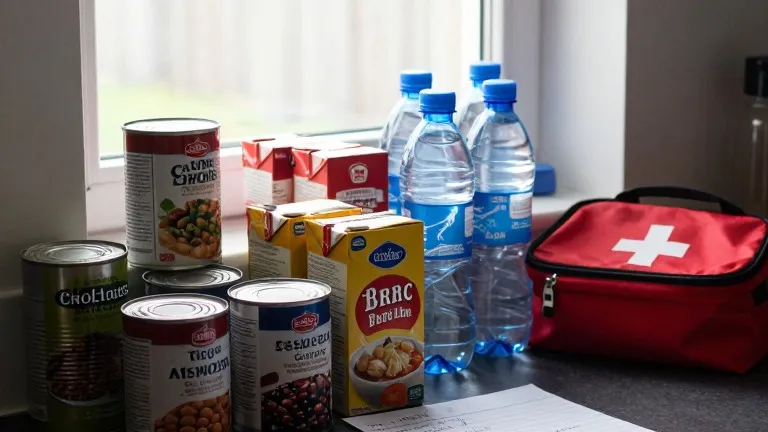
British shoppers are filling their pantries after the government began advising families to keep enough food and water on hand to last 72 hours. The guidance, which arrived alongside warnings about Russian state-sponsored terrorism and climate disruption, prompted some people to begin buying extra provisions immediately. Others, however, dismissed the instructions as pointless.
The state launched the Be Ready initiative on Thursday. It instructs residents to stockpile dried foods, bottled water, medicines, and backup power supplies to prepare for a wide range of potential emergencies. Ministers have issued similar warnings for several months.
Lawrence Barratt, who lives in Hythe in Hampshire, said he started buying extra supplies two weeks ago. He adds beans, soups, chilli con carne, noodles, and rice to each weekly trip to the store. Barratt, who is preparing for two people for three days, also owns a first aid kit, a battery-powered FM radio, and a torch. He said he viewed the government's advice online and thought about empty store shelves during the first lockdown in 2020. He admitted he would be completely unprepared for anything.
Marco Camurri, of Greenwich in London, is buying pasta, passata, stock cubes, tinned food, bottled water, medicines, and toilet paper. His household keeps a fuel tank above 50 percent, which covers about 300 miles of driving. They began preparing several months ago following reports of supply chain disruption linked to El Niño. Camurri tracks expiration dates on a spreadsheet so items can be replaced. He said his family can leave for continental Europe if the UK enters war or London faces direct attacks.
Jack Davenport, from North Shields on the River Tyne, cited El Niño as a reason to stockpile. He described the threats facing the country as hard to judge in size, pointing to climate disasters, Russian shadow threats, artificial intelligence, and interest rate rises driven by energy insecurity. Davenport called the country's physical and technological infrastructure creaking and outdated.
Not everyone accepts the guidance. Deirdre O'Sullivan, of Leicester, called it daft. She compared the advice to 1970s instructions telling people to hide under a table during a nuclear attack. O'Sullivan argued that danger to drinking water should be anticipated more precisely and that extreme food shortages would become apparent over a much longer period. She described the plan as something Yes Minister would come up with to demonstrate they have a policy in place, even if that policy is clearly totally useless.
Source: The Guardian