Prediction Markets Beat Broadcasters in Midterm Calls
Platforms like Kalshi and Polymarket projected winners in key Senate races before major news networks, projecting 54 Democratic seats.
By Thabo Hoffmann ·
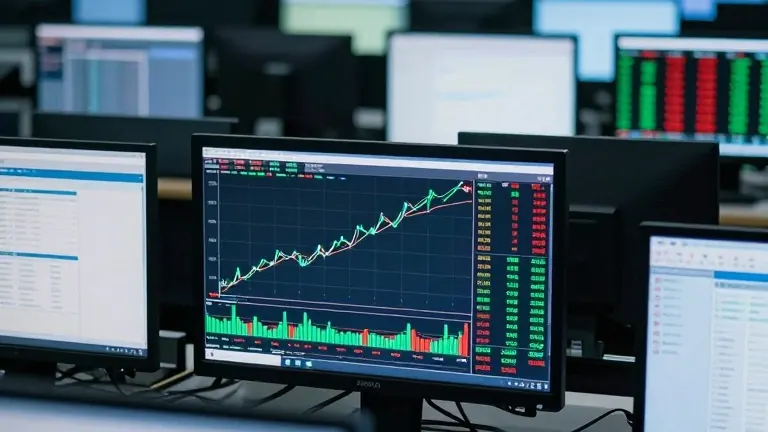
Prediction market platforms demonstrated a new level of speed in calling congressional races during the 2026 midterms, often projecting winners before traditional media outlets. Traders on these platforms treated Democrats as the favorites to control both chambers before polls closed at 6 p.m. Eastern time on Tuesday.
The markets predicted Democrats would capture at least 53 Senate seats, with the 54th seat considered a toss-up. By Wednesday, Democrats had secured 54 seats. This included victories in Iowa, where markets had set the odds at 50-50, and South Carolina, where Republicans were initially viewed as narrow favorites. In Mississippi and Alaska, markets assigned 90% odds to Democratic candidates Scott Colom and Mary Peltola, respectively.
Major platforms posted results on X on Tuesday night, frequently beating CNN, Fox News, and the Associated Press in announcing winners. Jack Such, a spokesperson for Kalshi, stated the platform felt comfortable making calls once a candidate's odds exceeded 99% and trading on the opponent had dried out. Shayne Coplan, chief executive of Polymarket, noted on X that the median time gap between Polymarket's projections and major outlets was 31 minutes across 10 key races.
The platforms adjusted their odds rapidly as vote counts arrived. In South Carolina, Democrat Annie Andrews became the favorite on Kalshi shortly after 7:30 p.m. Eastern, just 30 minutes after polls closed. In Texas, Democratic state Rep. Gina Hinojosa defeated Republican Gov. Greg Abbott. Hinojosa's odds on Polymarket surged from 39% to 73% within five minutes of the first poll closings.
Flip Pidot of the Coalition for Political Forecasting described the shift as having financially motivated analysts working around the world to provide faster signals. However, Michelle Kendler-Kretsch of the Anti-Corruption Data Collective argued that one accurate night does not justify looser regulation. She cited a Reuters/Ipsos survey finding that most Americans oppose election trading, noting that underlying risks remained despite the accuracy.
The platforms have faced criticism for past misses, including Brazil's presidential race where Luiz Inácio Lula da Silva had only about 20% odds on Kalshi. High-profile Democratic primaries in Wisconsin and Michigan also saw unexpected outcomes, though Abdul El-Sayed won his primary in Michigan despite low odds. Rajiv Sethi, an economics professor at Barnard College, compared these long-shot wins to tossing coins, noting that low probability events still occur.
Eric Zitzewitz, an economics professor at Dartmouth College, said public understanding of market probabilities is still developing. Harry Crane, a statistics professor at Rutgers University, called the 2026 midterms the first true prediction market election, suggesting the platforms will remain a fixture in future political cycles.
More Politics · National news · Report a business · Got a Story?