New Austin bus stops add power to keep electric buses running longer
Overhead chargers at two new park-and-ride hubs allow CapMetro vehicles to extend their daily service window from eight to over 20 hours.
By Thabo Hoffmann ·
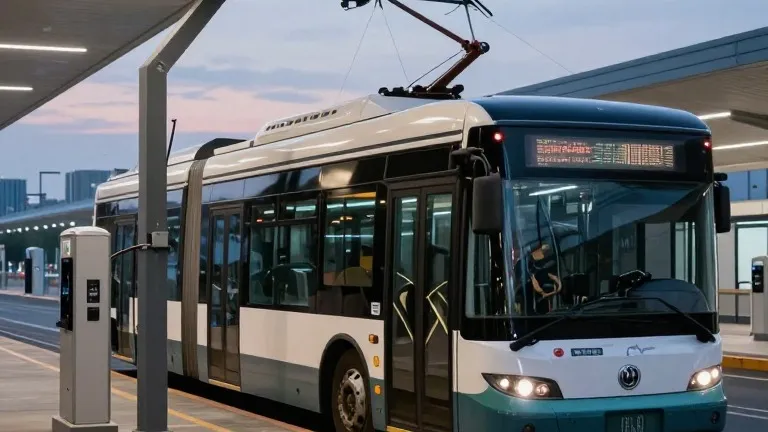
CapMetro opened two new transit hubs in Austin this week that feature overhead charging equipment for electric buses. The facilities, known as Goodnight Ranch and Expo Center, are now operational alongside the Rapid 800 and Rapid 837 routes.
The primary function of the new sites is to provide on-route charging. Buses use pantograph-style connectors to draw power from overhead lines at the end of their shifts. This process replenishes battery capacity while the vehicle is on the line, rather than relying solely on overnight charging at a central depot.
CapMetro Chief Operations Officer Andy Skabowski stated that this method significantly increases the time a bus can remain in active service. He noted that a standard bus typically holds eight hours of service. With the new on-route charging, that window expands to between 20 and 22 hours. Skabowski explained that this capability supports the agency's goal of providing 10 to 15 minute service intervals.
The charging infrastructure is part of a larger network managed by Camber Charging. At the main bus depot, Camber installed two 1,440 kW charging systems. These units connect to 48 industrial dispensers, creating a total capacity of 2.9 megawatts. The depot setup is designed to charge up to 48 electric buses simultaneously during the night.
The vehicles serving these routes are built by New Flyer, a Canadian manufacturer. The buses use the Xcelsior battery-electric transit platform. New Flyer indicates the platform can offer up to 660 kWh of available capacity. The vehicles produce up to 320 horsepower and provide full torque at 0 rpm. This specification is intended to handle the stop-and-go traffic patterns common in urban environments.
Camber Charging also handles preventive maintenance and energy management software for the depot and the two new terminals. Remote diagnostics are available across all three locations. The project was first announced in June. The new hubs add passenger amenities to the charging infrastructure at the termini of the Rapid 800 and 837 lines.
Source: Electrek
More Business · Tech news · Consumer Watch · Report a business · Got a Story?