Federal Funds: $500,000 for Western Washington Agroforestry Projects
Agroforestry Northwest secured nearly half a million dollars in federal grants to build sustainable farming systems in the Puget Sound region.
By Emmanuel Obasi ·
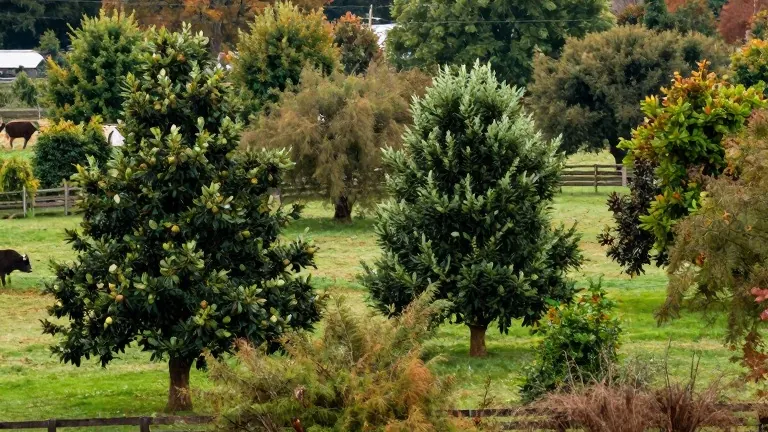
Farmers in Western Washington will see new construction on their properties as Agroforestry Northwest deploys nearly $500,000 in federal grants. The nonprofit received the funding in 2026 to support the expansion of agroforestry, a practice that combines crops, plants, and animals in the same area. This system allows smaller operations to overlap harvestable crops with grazing areas, maximizing the productivity of every acre.
The organization uses Raising Cane Ranch in Snohomish as a home base for its northern expansion. The 38-acre property, located at 5719 Riverview Road, was originally a hay and cattle operation. Today, it features a dense arrangement of trees and plants that weaves across the land. The transformation serves as a model for other landowners who want to improve ecological conditions while maintaining agricultural yields.
Agroforestry Northwest was formed in 2022 and is the only agroforestry-dedicated nonprofit in the Pacific Northwest. Executive Director Carrie Brausieck stated that the group aims to introduce as many agroforestry methods as possible in the northwest part of the state. She noted that this region has been slower to adopt many agricultural techniques than the farm-heavy Eastern Washington. "Agroforestry is relatively new to our region," Brausieck said. "The first several years were just education, outreach and talking."
The group currently runs a 100-acre demonstration forest in Arlington and maintains several biocultural restoration sites along the Skykomish River. Plans include establishing more sites on the Nooksack River in the coming years. Members survey local farms and provide grants for the construction of sustainable agriculture designs, including alley cropping, windbreaks, and riparian buffers. The organization works with conservation districts to amplify adoption rates across the Puget Sound.
Conservation districts have been a key partner in this outreach. The San Juan Islands County Conservation District works with the nonprofit to gauge public interest and hold educational events. In Skagit County, the group collaborated with local districts to research agroforestry benefits in wetlands, releasing the Wet Feet Farming guidebook in 2024. These local partnerships help implement projects that are too large for the nonprofit to handle alone.
Federal subsidy programs are often necessary because the cost of implementation is high for individual farming operations. Brausieck said, "This is expensive to do. Not every landowner can just go out and purchase trees." Recent increases in fuel prices have expedited these costs. A proposed decrease of nearly $5 billion to the USDA 2027 budget makes the future of agroforestry uncertain for many. Similar cuts took a heavy toll on nonprofits and conservation districts in 2025, forcing the organization to adjust staff and rewrite grants to recuperate funding.
This year, those efforts paid off with the new federal grants. Brausieck anticipates the funding will support the construction of many local projects. The organization also integrates creative ecology, a philosophy that views natural resources as artistic rather than strictly consumable. At Raising Cane Ranch, this approach led to the construction of an elaborate garden and cathedral formed by dozens of plants. Brausieck described the goal as finding the balance between what the farm needs and what the ecology needs.
Source: Salish Current
More Business · Consumer Watch · Report a business · Got a Story?