Cook Report: 14 Senate races in play as Democrats chase 4-seat flip
New ratings place five states Trump won by double digits in 2024 as toss-ups, while North Carolina shifts to likely Democrat territory.
By Emmanuel Obasi ·
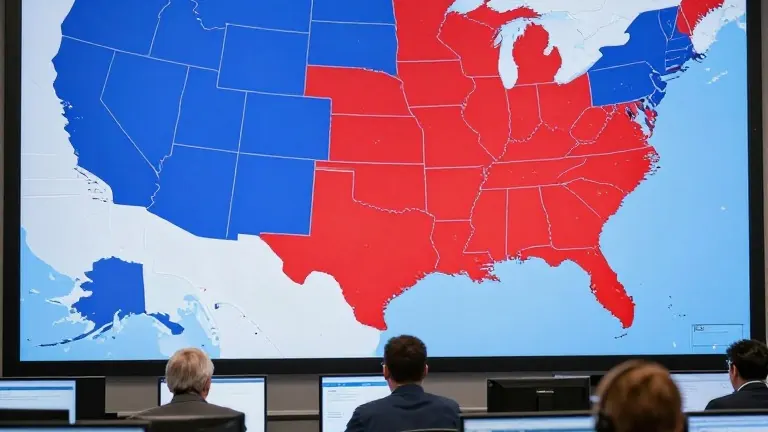
The Cook Political Report now rates 14 Senate races as competitive, a sharp departure from the start of the cycle when Democrats were viewed as underdogs. The report designates North Carolina as a likely Democratic pickup, while Alaska, Iowa, Kansas, Ohio, and Texas are all classified as toss-ups despite President Trump winning those states by double digits in 2024.
The shift reflects changing polling data, ad spending, and candidate activity over the past year. Democrats need to flip a net of four Republican-held seats to gain control of the chamber. The current map suggests that outcome is possible but not guaranteed, as Republicans retain strong positions in states like Georgia and South Carolina.
At the beginning of the 2026 cycle, the path to Senate majority for Democrats looked narrow. Most open seats were in red states, and early ratings favored the GOP. However, the ongoing conflict in Iran and economic pressures have widened the field of competitive contests. This has moved several states from Republican likely holds to the toss-up column.
Kirsten Gillibrand, chair of the Democratic Senatorial Campaign Committee, described the party's position as energizing. She noted that candidates are winning in deep red and purple areas. Gillibrand stated, 'People want change, and we have so much talent on the field right now.' She expressed confidence in the party's ability to capitalize on voter dissatisfaction.
The National Republican Senatorial Committee offers a contrasting view. Bernadette Breslin, the group's national press secretary, criticized the Democratic surge as reaching a fever pitch. She pointed to the Alaska race, where allegations emerged regarding the recruitment of incumbent Dan Sullivan. Breslin argued that common-sense voters in red-leaning battlegrounds are preparing to reject Democratic agendas.
North Carolina stands out as a key indicator of the current trend. Former Governor Roy Cooper is the presumptive Democratic nominee, with both parties conceding his likely victory. Trump acknowledged the shift during a recent trip to the state. He said, 'He's going to become your senator, and it's crazy.' The state was a toss-up earlier in the cycle after Trump won it by three points in 2024.
In Ohio, former Senator Sherrod Brown is challenging incumbent John Husted. Trump has actively campaigned for Husted, focusing on personal attacks. However, Democrats are leveraging issues like gas prices and AI data center growth. The race remains a toss-up, with Brown's high name recognition offsetting his status as a challenger in a state Trump won by 11 points.
Texas presents a complex scenario for Democrats. State Representative James Talarico is leading in most polls against Attorney General Ken Paxton. Trump endorsed Paxton over Talarico in the primary, a decision that has driven heavy spending. More than $500 million has been spent on the race since the primary, with Republicans accounting for over $300 million. Democrats have not won a statewide office in Texas since 1994.
Georgia, once a top target for Republicans, is now a likely hold for Democrats. Raphael Warnock’s opponent, Jon Ossoff, has a significant financial advantage. The report rates the race as likely Democratic, a notable reversal from earlier projections. This shift reduces the number of seats Republicans need to win to maintain or gain control.
The final outcome will depend heavily on Republican turnout. Low participation among GOP voters could result in Democrats netting only one or two seats. Higher turnout could see the Democratic majority expand to six or seven seats. Voters will head to the polls on November 3, 2026, to decide the fate of these 14 competitive contests.
Source: KNKX Public Radio