Wild Bee Pollen Guides Planting Choices on Klamath River Restoration Sites
Data from cavity-nesting bees reveals that invasive star thistle currently serves as a primary food source for native pollinators, prompting habitat managers to adjust their removal strategies.
By Lucas Collins ·
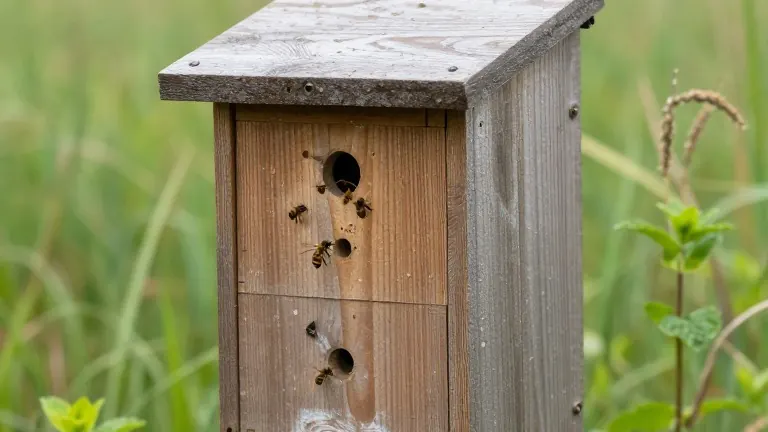
Mint scent drifted through the wetland air as Brissa Garcia checked a wooden box mounted near the Klamath River in Northern California.
Garcia is a wildlife biologist with RES, the company responsible for restoring three former reservoirs along the river in Northern California and Southern Oregon. The site, located in Long Gulch near the former Iron Gate dam, was drained in 2024. RES and the Yurok Tribe have planted billions of seeds and thousands of trees, shrubs, and flowering plants in these reservoir footprints to support pollinators.
Garcia opened the box and removed a clear tube containing crushed leaves, yellow pollen, and a tiny bee egg. These structures, known as BeeOtels, are provided by a Belgium-based company called BeeOdiversity. Six such units are installed across the former reservoirs. Jenny Wallgren, a regulatory manager for the Lower Klamath Project at RES, explained that the team monitors solitary and cavity-nesting bees that do not build hives but use small cavities for nesting.
During the field season, Garcia inspects the hotels weekly and sends tubes to a laboratory for DNA analysis. The pollen data helps the team identify pollinator species, track year-to-year changes, and determine which plant species the bees visit. Wallgren noted that this information can be compared with weather data and plant monitoring records to create a detailed picture of the ecosystem.
David Strelneck, the North American coordinator at BeeOdiversity, stated that bees collect millions of environmental samples daily. This allows for incredibly detailed site analysis. At Lakeside Farms on the east side of Klamath Lake, pollen analysis from honeybee hives showed that the number of different plant species on a two-square-mile site increased by 93% over the first three and a half years of the project. The data also helped managers adjust pesticide application methods, leading to a significant drop in chemical incidence in bee results a year later.
Lincoln Best, a taxonomist for the Oregon Bee Atlas at OSU Extension Service, said habitat loss is the greatest threat to native bees. The OSU Extension Service has developed resources to help restoration projects by using data from citizen scientists. Last year, volunteers documented 34,000 bees on 4,600 plants across Oregon. This data feeds into Melittoflora, a website that maps relationships between native bees and plants. Best said the presence of rare specialist bees, which rely on single flower species, can validate the success of restoration efforts.
In August, Garcia observed beggarticks, a plant with orange-yellow flowers and sticky barbed seeds, still blooming in the Long Gulch wetland. RES uses staff botanists, tribal partners, and historical records to select a mix of plants that support various pollinators. Wallgren admitted that BeeOtels only capture data from specific cavity-nesting species and miss bees that nest underground. However, the pollen data already provided a key insight: late in the previous season, native bees largely visited star thistle, a highly invasive plant that RES aims to remove.
Wallgren stated that the team needs to replace star thistle with other native plants rather than just removing it to keep pollinators supported. RES crews continued planting through the fall. By spring, these new plants are expected to attract wild bees collecting pollen for their young, providing continued data for land managers.