US Halts $25 Million Payment to AUAF, Stranding 1,000 Students
The State Department cited a history of accountability issues in its decision to stop funding the online program that serves as a primary degree pathway for Afghan women.
By Thabo Hoffmann ·
The United States State Department has refused a $25 million grant to the American University of Afghanistan, effectively cutting off the primary financial lifeline for an institution that educates approximately 1,000 students. The decision leaves the university, which is roughly 75% female, in a precarious position as it continues to operate online from within Taliban-controlled territory.
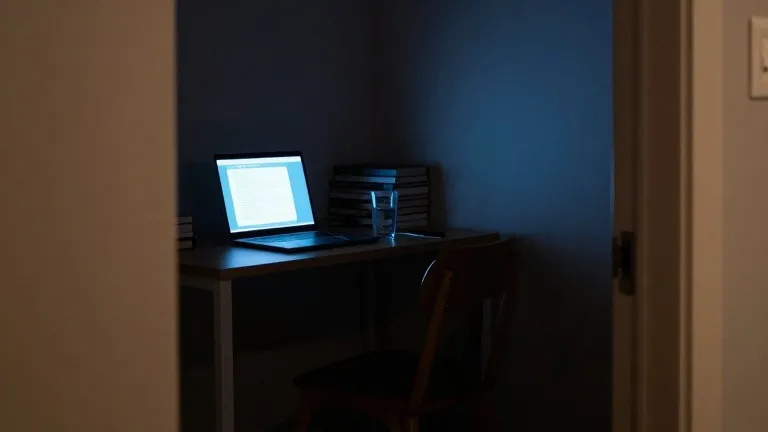
A student identified as Laila, who studies political science in her mid-twenties, learned of the funding cut via email. She is part of a cohort of women who study in secret through the university’s remote program. Because the Taliban seized the physical campus, these students join lectures from home using aliases and with their cameras turned off. Laila described the experience of relying solely on audio, noting that she knows her classmates only by their voices.
The university was established in 2006 with substantial US backing. Former First Lady Laura Bush announced the initial commitment, framing the institution as a tool to train future leaders and build goodwill for the Afghan government that replaced the Taliban. Patrick Fine, who served as the Afghanistan mission director for USAID at the time, recalled that many within the agency viewed the project as risky. Critics at the time questioned whether the investment was a waste of money, but the Bush administration pursued it as a stabilizing measure for a young democracy.
Scrutiny of the university’s finances began in 2016 when US inspectors launched an investigation. By 2018, auditors reported that poor accounting practices made it difficult to track exactly how aid money was spent. John Sopko, the federal inspector general who oversaw the probe, expressed surprise that funding continued despite these findings. He told Deutsche Welle that the persistence of the grants was unexpected given the audit results.
This year, the State Department press office stated that the recent decision reflects the university’s history of repeated lack of accountability for American taxpayer dollars. Fine, who now advocates for the university, dismissed the official rationale as smear tactics. While he admitted that earlier audits revealed struggles with USAID’s regulatory requirements, he maintained that they did not uncover major fraud. He characterized the university as a worthy investment because it remains one of the few organizations actively reaching Afghan women.
Although other donors contribute to AUAF, the United States has historically borne the majority of the costs. A 2018 US report indicated that American funding covered nearly 90% of the university’s budget. The State Department noted that the university is free to seek other partners, meaning the end of US grants does not automatically end its operations. However, the loss of the specific $25 million allocation creates significant uncertainty for the institution’s future stability.
For students like Laila, the financial news has had an immediate emotional impact. She described feeling a loss of motivation and hope since learning of the cut. She has largely stayed in her room, contemplating the fact that she expected to have graduated years ago and be pursuing a master’s degree abroad. Now, she estimates it may take five to ten years to find a new path forward.
Laila’s academic journey has been interrupted multiple times. She was at another Kabul university with two exams remaining when the Taliban returned to power in August 2021. Her degree remained unfinished after the Taliban announced a ban on women's education in December 2022. She eventually secured a scholarship to AUAF and restarted her studies. She noted that not every girl had such an opportunity, emphasizing the rarity of her access to higher education.
Fear remains a constant factor in the daily lives of AUAF students. Laila reported that some peers have received threatening calls and messages. She worries that Taliban authorities could search her phone and discover university emails. She said officials have entered her home several times to search family belongings. She keeps the possibility of being targeted in the back of her mind, wondering if tomorrow might be her turn.
The State Department’s action marks a shift in support for a program that has served as a critical route to university education for Afghan women in recent years.
Source: Deutsche Welle