Trump Administration Intervenes in Evanston Reparations Lawsuit
The Justice Department joined a federal challenge to Evanston's $25,000 housing grant, arguing that race-based distributions violate the Constitution and the Fair Housing Act.
By Thabo Hoffmann ·
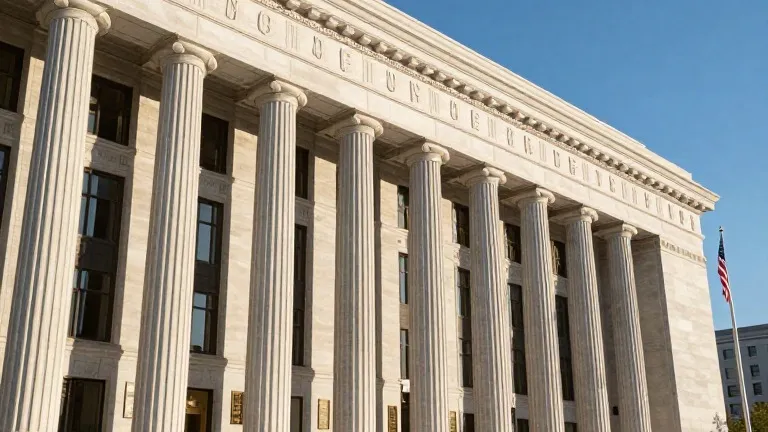
A federal judge permitted the Justice Department to intervene in a lawsuit challenging Evanston, Illinois' municipal reparations program this month. The department argues the city's distribution of funds based on race violates the 14th Amendment's equal protection clause and the Fair Housing Act. This legal move marks the administration's direct entry into a dispute that has drawn national attention to local efforts to address historic racial wealth gaps.
Robin Rue Simmons, who goes by N'nanba, helped establish Evanston's program. The initiative provides a $25,000 housing grant to Black residents whose families were harmed by discriminatory housing policies. Simmons, a former city councilwoman and current chair of the Evanston Reparations Committee, has assisted more than 100 communities in replicating this model. She stated that despite administrative barriers, federal redress remains the collective goal.
The administration's opposition aligns with a wider campaign against diversity, equity and inclusion initiatives. Justice Department spokeswoman Kiersten Pels said race-based government benefit programs are often unconstitutional and violate federal civil rights law. Last year, the department sent warning letters to leaders in Asheville and Buncombe County, North Carolina, while they considered similar programs.
The original lawsuit was filed by Judicial Watch. Michael Bekesha, who represents the plaintiffs, stated that the Constitution prevents governments from picking winners and losers based entirely on race. The case contends that the city distributes funds by race without identifying specific harm to individual recipients.
President Donald Trump has voiced hostility toward comprehensive Black reparations. In a September speech, he told supporters that they want to steal money for reparations and that the effort is going nowhere. William Darity, a co-author of a book on reparations, noted that no president has supported comprehensive Black reparations. Darity observed that Trump will speak the word, but with hostility.
The debate unfolds as the United States marks its 250th anniversary. In March, the U.N. General Assembly passed a resolution describing the trafficking of millions of enslaved Africans as the gravest crime against humanity. More than 120 countries backed the resolution. The United States, Argentina, and Israel voted against it, while 52 nations abstained.
Local programs continue to operate despite federal pressure. Juan Woolfolk, a Georgetown University descendant, is using a $10,000 scholarship to study museum studies at Southern University at New Orleans. Virginia Theological Seminary makes annual cash payments to descendants of people who labored on its campus from an endowment that has grown from $1.7 million to $2.8 million since 2019. In Evanston, recipient Joe Martin, a Delta flight attendant, said that when a legitimate program is created, the government says no.
The trans-Atlantic slave trade forced an estimated 12.5 million Africans onto ships bound for the Americas. About 1.8 million did not survive the journey. Roughly 388,000 were taken to what is now the United States, where chattel slavery lasted until 1865.
Source: KSAT 12
More Politics · Georgetown news · Report a business · Got a Story?