Salmon dispute shapes Alaska Senate race
A clash between industrial pollock trawlers and Indigenous subsistence fishers has become the central economic issue in a tight U.S. Senate contest.
By Lucas Collins ·
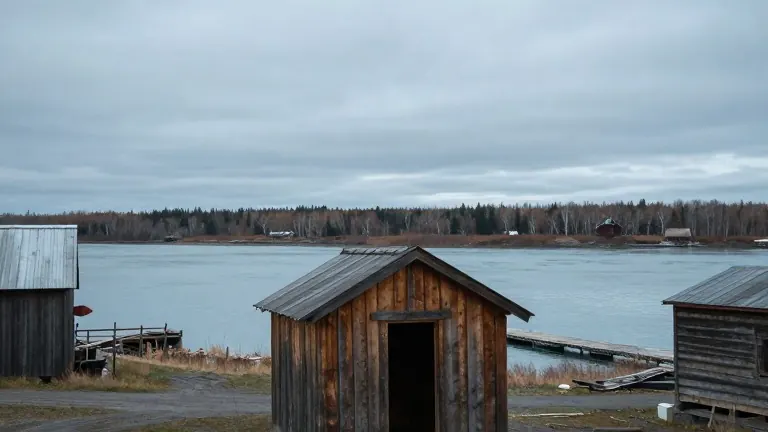
Salmon depletion in Western Alaska has become the defining economic issue in the state's U.S. Senate race. The dispute pits industrial pollock trawlers against Indigenous communities relying on subsistence fishing for survival. This conflict is now driving a tight contest between incumbent Republican Dan Sullivan and Democratic challenger Mary Peltola.
The tension centers on the Kuskokwim River, where traditional salmon runs have declined for years. Evon Waska, a resident who settled his family at the river's edge, reported that his drying racks remain empty. Government agencies frequently close the river to fishing to conserve fish stocks. These closures often restrict Indigenous families who fish to feed their households, while Waska says industrial trawlers operating miles offshore remain active.
The pollock industry, valued at approximately $1 billion, uses sock-shaped nets that measure a quarter mile long. These nets have openings wide enough to match a football field. While the vessels target white pollock, they also capture king salmon and other species by accident. This bycatch is often discarded, a practice that has intensified local anger toward the fleet.
Senator Sullivan, who has historically supported the pollock industry, introduced new legislation this year. He described the bill as the most comprehensive bycatch legislation ever created to reduce accidental catch and protect seafloor habitat. Peltola, an Indigenous candidate from the Kuskokwim region, proposes banning factory trawlers, the largest vessels in the pollock fleet. She characterized Sullivan's legislative effort as a last-minute political maneuver.
Campaign advertisements have turned the fishery into a battleground. Sullivan's ads urge voters to call the senator to support his bycatch bill. Peltola's ads accuse Sullivan of accepting over $300,000 from out-of-state corporate trawlers. Her campaign also alleges that Sullivan waited until the final moments of the legislative session to propose a incomplete solution.
Heather Mann, who leads a trawlers association, argued that blaming the pollock fishery ignores scientific data. She stated that eliminating pollock trawling would have minimal impact on restoring salmon runs. Traders report that pollock trawlers caught 40,000 Alaska salmon earlier this year. Although this number represents a small fraction of the total pollock harvest, the loss is acute in remote villages where fishing is the primary occupation.
In the village of Kwethluk, tribal president Mary Nikolai observed that local smokehouses sat unused throughout the summer. She described the decline as a slow trend that effectively closes the local workforce out of their traditional livelihood. The community views the river's health as central to its cultural and economic stability.
The race is expected to determine the balance of power in the U.S. Senate. Candidates have framed the election as a choice between supporting industrial efficiency and protecting Indigenous subsistence rights. The outcome will signal a direction for federal fisheries management in the coming years.
Voters in Alaska are currently weighing these economic and cultural factors as they prepare to cast ballots. The campaign has focused on specific legislative proposals and financial disclosures from both candidates. The final results will establish the state's new congressional representation.
The next phase of the election cycle involves final voting and the official certification of results. Both campaigns are continuing to air advertisements that reference the salmon crisis. The federal government will monitor the transition of power in the Senate based on the November vote.
Source: KNKX Public Radio