Panthalassa Opens Vancouver Factory for Ocean-Based AI Data Centers
The Portland startup, which raised over $300 million this year, aims to use wave energy to power floating computational hubs on the deep ocean.
By Lucas Collins ·
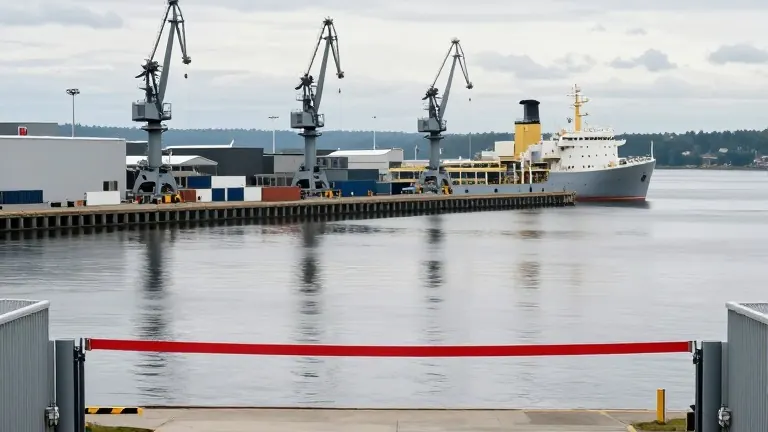
A ribbon was cut at the historic Kaiser Shipyard site in Vancouver, Washington, marking the opening of a new manufacturing facility for Panthalassa. The Portland-based company plans to produce wave-powered devices at this location, which will support its strategy for building floating artificial intelligence data centers in the open ocean.
The facility represents a shift in Panthalassa’s operations. The company has moved from custom manufacturing to an assembly line model. This expansion is intended to test the theory that the firm can replicate its production capabilities at factories around the world. The Vancouver site is the first of these planned international locations.
Panthalassa raised more than $300 million this year to fund its expansion. The capital is being used to develop and deploy self-driving buoys, or nodes, in deep oceans globally. These nodes generate energy from waves. That energy is then used to power the floating AI computation hubs. The company takes its name from the super ocean that covered most of the Earth's surface 190 million years ago.
The primary goal of the floating hubs is to address the energy demands of artificial intelligence without the typical land-based drawbacks. Panthalassa argues that ocean-based facilities avoid carbon emissions, fresh water contamination, and neighborhood disruption. These factors have fueled a backlash against data centers built on land.
The choice of the Columbia River location in Southwest Washington places the manufacturing base near the waterway the devices will eventually traverse. The factory is situated at the Kaiser Shipyard, a site with a long history of industrial production in the region. The new plant will specifically build the nodes that harvest wave energy.
The move reflects a growing interest in alternative power sources for the tech sector. As AI models require more computational power, the need for reliable, clean energy has intensified. Panthalassa’s approach combines renewable energy generation with data processing in a single offshore platform.
The company’s strategy relies on the ability to scale production. By establishing an assembly line in Vancouver, Panthalassa aims to standardize the manufacturing of its wave-energy devices. This standardization is necessary for the company to meet its goal of seeding oceans with these nodes. The success of the Vancouver factory will determine the timeline for future international plants.
The facility opens as the company seeks to validate its business model. The transition to an assembly line indicates an expectation of high-volume production. The nodes are designed to operate autonomously in deep water. The energy they generate is directed to the floating hubs, which house the AI servers.
Panthalassa’s entry into the market adds a new dimension to the debate over data center placement. The company positions its ocean-based solution as a way to meet the energy needs of AI while minimizing environmental impact on land. The Vancouver factory is the physical manifestation of that plan, moving the concept from theory to industrial reality.
More Business · Consumer Watch · Report a business · Got a Story?