Nigeria's New Ebola Case Raises Questions About Travel Route
Swiss and Ugandan officials offer conflicting accounts of how the infected diplomat's spouse contracted the virus, complicating containment efforts.
By Emmanuel Obasi ·
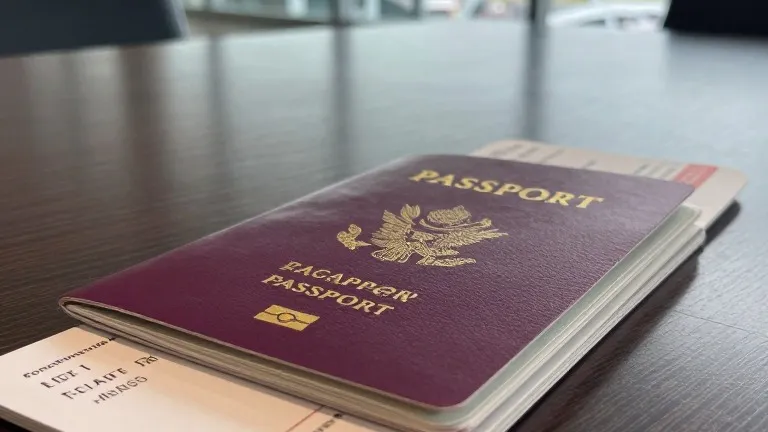
The Swiss foreign ministry identified the patient as the Ugandan-born wife of a diplomat posted in Abuja on Friday. The ministry stated that the woman did not travel to the Democratic Republic of Congo, where the outbreak began. Officials believe she contracted the virus while traveling with her husband in Uganda.
This account conflicts with earlier reports from Uganda. Ugandan authorities previously said the woman visited eastern DR Congo. A government spokesperson told Reuters on Thursday that Uganda had no recent Ebola cases and would publicize any new data immediately. The discrepancy complicates efforts to trace the origin of the infection in a country that has been Ebola-free since August.
The World Health Organization is continuing its investigation into the source of the Nigerian case. Catherine Smallwood, a WHO Ebola incident manager based in DR Congo, said during a UN briefing in Geneva that staff in the Congo had no information linking the patient to that country. The organization is currently examining whether the patient came into contact with an Ebola case in Kenya.
Dr. Wessam Mankoula, head of emergency preparedness at the Africa Centres for Disease Control and Prevention, noted that both individuals passed through Entebbe airport in Uganda on October 3. He said officials must compare the timing of this transit with the onset of the Nigerian patient's symptoms to determine if infection occurred at the airport or elsewhere.
Some experts remain skeptical of the airport connection. Marion Koopmans, a Dutch virologist on the WHO emergency committee, described the theory as speculative without proof that the two shared a specific space. She argued that random presence at a large airport does not meet the standard for an epidemiological link.
Muhammad Ali Pate, Nigeria's health minister, said the case is currently contained. He emphasized that contact tracing is ongoing to prevent the virus from spreading into local communities. Pate stated the goal is to keep the infection isolated before it reaches the wider population.
Melaku Yirga, vice president for Africa at Prosper Global, said the confirmed cases in Kenya and Nigeria demonstrate the need for close cross-border cooperation. He urged for rapid information sharing and adequate resources for frontline health workers. The outbreak is caused by the Bundibugyo virus, which has infected over 9,500 people and killed nearly half of them since being announced on May 15.
Source: The Guardian