Gen. Votel: New Iran Strikes Will Weaken Targets, Not End War
The former Central Command chief argues that air power alone cannot force a conclusion without a defined end state.
By Lucas Collins ·
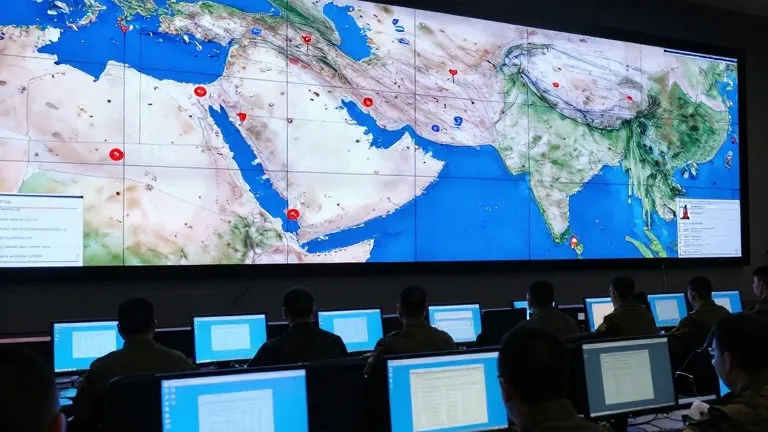
Retired Army General Joseph Votel stated on October 23 that a new wave of U.S. and Israeli airstrikes on Iran would likely degrade the country’s military capabilities but would not end the conflict. Votel, who currently chairs the Combating Terrorism Center at West Point, told NPR's Leila Fadel that previous strikes have already targeted many of the same assets. He noted that Iran has demonstrated the ability to rebuild those targets, meaning fresh attacks serve to buy time and punish Tehran rather than force a surrender.
Votel led U.S. Central Command from 2016 to 2019, overseeing operations across the Middle East. He argued that the U.S. has struggled to define its objective in the current war. In his view, a successful campaign requires a clear end state, specifically the resolution of the uranium enrichment issue and the reopening of the Strait of Hormuz. He emphasized that military force is only one component of national power, and that economic, diplomatic, and information pressure must align with the same goal.
The general pointed to the financial front as an area showing tangible results. He cited recent reporting that Iran’s so-called ghost fleet has exhausted its oil supplies due to the blockade and sanctions. While he acknowledged that this economic squeeze takes time, Votel said there is definite movement in that direction. He also noted that the U.S. aims to lower domestic gas and diesel prices by ensuring free commerce through the Strait of Hormuz.
Votel identified Iran’s nuclear program and its use of regional proxies as the two principal U.S. concerns. He mentioned that Iran utilizes groups like the Houthis to create instability across the Arabian Peninsula. However, he maintained that reopening Hormuz and halting enrichment remain the core issues. He stated that bringing Iran to the negotiating table requires a coordinated use of all national power tools and the patience to sustain that pressure.
Regarding military readiness, Votel said American offensive power in the region is substantial and the ability to strike is not in question. He identified missile defense as the primary constraint. He noted that defensive interceptors protecting U.S. forces and regional partners are under heavy pressure. In his assessment, the U.S. offensive capability is where it needs to be, but the defensive posture may face limitations as the war continues.
The general’s comments come as Washington considers a post-election bombing campaign. He warned that without a clear declaration of how the war will end, strikes will remain a tool for degradation rather than a path to victory. He stressed that the current approach lacks the clarity needed to change Tehran’s calculus.
Source: NPR
More Politics · World news · Report a business · Got a Story?