Coalition Destroys Houthi Missile Tunnels as Egypt Backs Saudi Defense
A Saudi-led operation destroyed five tunnels and four launchers while Egyptian lawmakers approved support for Riyadh against Houthi attacks.
By Emmanuel Obasi ·
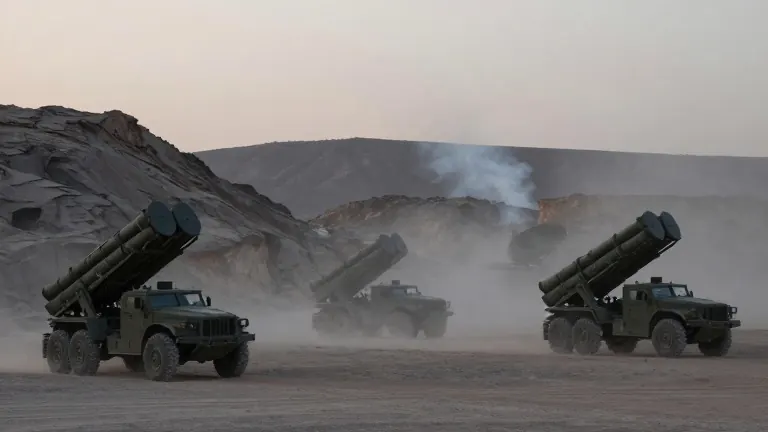
Markets watched the Red Sea on Monday as the Saudi-led coalition struck Houthi missile infrastructure inside Yemen.
The coalition destroyed five tunnels used for ballistic missile storage, four ballistic missile launchers, and another missile storage facility in Houthi-controlled territory, Maj. Gen. Turki al-Malki said. He said the operation also targeted rebel fortifications and military equipment along front lines and aimed to cut supply lines between areas held by the Houthis. Al-Malki said the coalition would continue to use "deterrent operational measures" to protect against attacks inside Saudi Arabia and in Yemen.
Egypt's parliament moved on the same question of support. Lawmakers in Cairo approved President Abdel-Fattah el-Sissi's request to help Saudi Arabia counter Houthi attacks, a step taken amid public concern that Egypt could be drawn into the Yemen conflict. Egypt's highest security body had previously pledged "all necessary and possible forms of support" to Saudi Arabia, including the defense of its security, resources, territorial integrity, and Islamic holy sites.
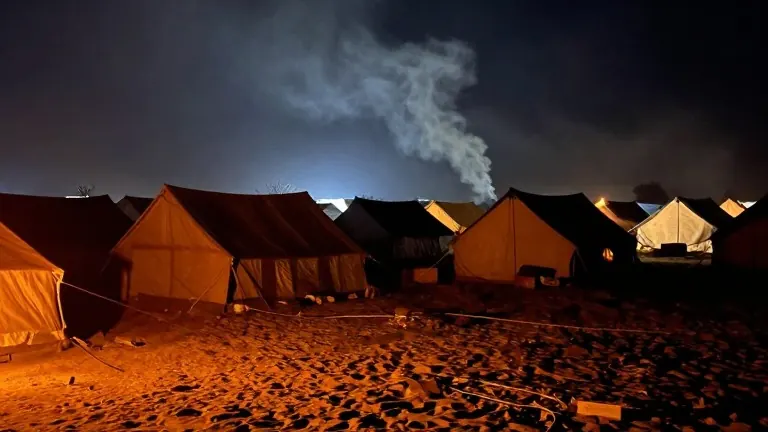
Claims on the ground diverge. Yemen's Houthi-run Health Ministry said Saudi-backed forces struck a hospital in Mokha, a Red Sea port city the Houthis recently seized, and a children's hospital in Taiz province on Sunday. The ministry did not provide evidence and did not report casualties. Two Mokha residents, speaking anonymously out of fear of reprisals, said Mokha General Hospital and at least 10 houses were damaged when a rocket hit a nearby four-story residential building. The Associated Press could not verify either account, and it was not clear whether the resident account described the same incident as the ministry's. Saudi-backed forces did not comment immediately.
The Houthis reported their own strikes. Spokesman Yahya Saree said rebels fired ballistic missiles at military gatherings and weapons depots belonging to Saudi-backed forces in Aden and Lahj provinces, causing losses. Those claims also could not be verified. The Yemeni government accused the rebels on Sunday of hitting displacement camps outside Aden without providing evidence.
In Israel, Defense Minister Israel Katz rejected reports of disagreement with the military over Iran. "Completely baseless and false," he wrote on X, adding that Israel had no plan to strike Iran before Tuesday's national elections but would respond "with great force" if Iran attacks first. Israeli Channel 12 reported Sunday that Prime Minister Benjamin Netanyahu instructed the military to carry out an "action" that army officials believe could quickly reignite conflict with Iran. Netanyahu's office called the report "fake news."
Four countries met in Tehran on Monday to discuss regional security. Maj. Gen. Mohsen Rezaei, secretary of Iran's Supreme National Security Council, hosted Saudi Defense Minister Prince Khalid bin Salman, Pakistan's armed forces chief Gen. Asim Munir, and Turkish intelligence chief Ibrahim Kalin. Iran's state-run IRNA reported the four agreed to continue talks but did not say when or where the next meeting would take place.
Turkish President Recep Tayyip Erdogan said in a televised address Monday that renewed attacks on Iran would destabilize the region and hurt countries outside the conflict, adding that talk of possible attacks had already raised fuel prices. U.N. Secretary-General Antonio Guterres said in Cairo he was "deeply alarmed" by settler violence and settlement expansion in the West Bank, and called for lifting Israeli restrictions on humanitarian aid to Gaza. He also called for restoring stability around Iran, the Strait of Hormuz, and Yemen's Bab al-Mandeb Strait.
Source: ABC News