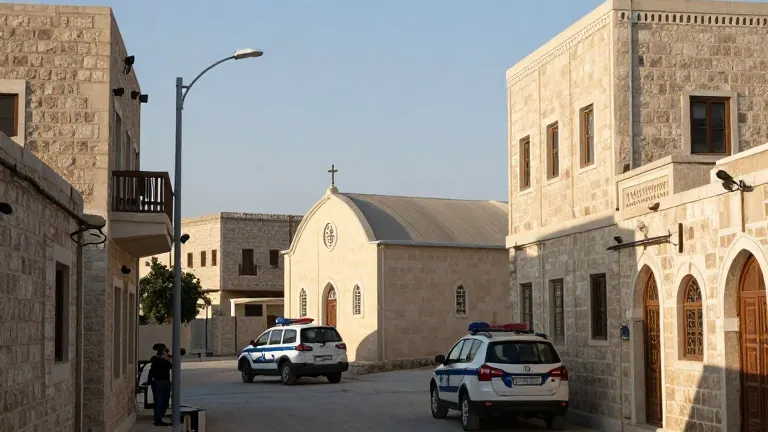
Ancient Village Preserves Multi-Faith Heritage
Güzelyurt, situated near Cappadocia, maintains a community of diverse ethnic and religious origins despite a major 20th-century population exchange.
By Lucas Collins ·
Traveler Rick Steves identified Güzelyurt as a primary destination in his recent report on central Turkey. The town lies at the edge of the Ihlara Valley, approximately 35 miles from the regional capital of Nevşehir. Steves described the location as having minimal tourism infrastructure but retaining substantial historical character.
The settlement is known for the coexistence of Greek, Turkish, Kurdish, and Bulgarian populations. In the town’s central market square, a statue of Mustafa Kemal Atatürk overlooks residents who consume sweet tea and play backgammon. Steves noted that the streets have changed little over the centuries, with daily life continuing alongside historical landmarks.
A key feature of the town is a ravine where residents maintain a lifestyle that Steves described as reminiscent of the Middle Ages. During a visit to a household in this area, he observed a boy playing a flute carved from eagle bone. The instrument is used by herding families to signal safety, with the father playing from the hillside and the son playing at home so the mother can hear that all is well.
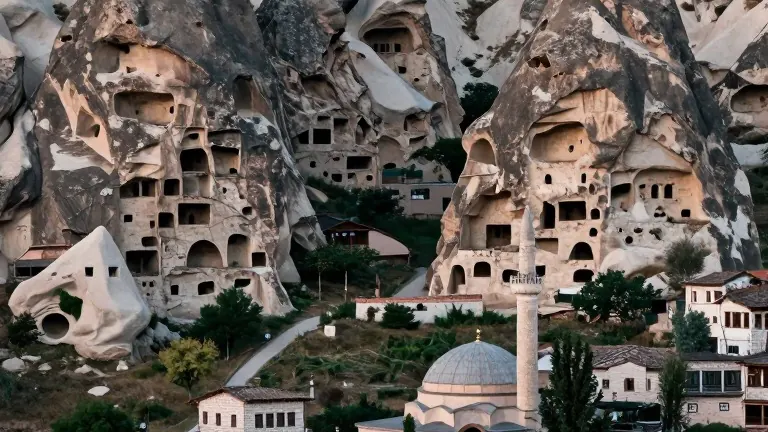
Steves hiked to the opposite side of the gorge to view monasteries carved into the volcanic cliffs by monks sixteen centuries ago. Erosion has displaced many ancient residents, but some still inhabit the structures. Below these cliffside dwellings stands the former church of St. Gregorius, built in 385.
The site of the church was once predominantly Greek Orthodox. Until the early 1800s, Greece and Turkey were part of the Ottoman Empire, allowing for mixed Muslim and Christian communities. In the 1920s, the two governments agreed to a population swap that moved most Christians to Greece and most Muslims to Turkey. Consequently, the historic church in Güzelyurt was converted into a mosque, marked by a single minaret.
The cliff face displays a vertical timeline of architecture, including troglodyte caves, Seljuk arches, and Ottoman facades. Above these older structures sits a 20th-century mosque with a tin dome and twin minarets. On a nearby hillside, large white rocks spell out the town’s name, which translates to beautiful land. Steves observed Mount Hasan in the distance, noting that residents consider the location their permanent home.
Source: Everett Herald