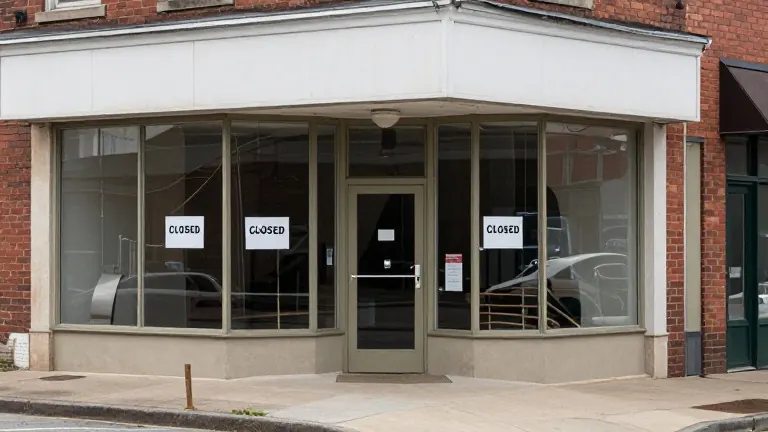
Square Sits On Verified Small Business Funds While Denying Appeal
A marketing firm submitted all required documents to Square but faced a suspension and a delayed denial that left the owner without funds or a clear explanation.
By Lucas Collins ·
A small business owner in the marketing and SEO sector recently found herself in a frustrating and financially damaging dispute with Square. The company had followed every procedural step to verify its identity and banking details. It provided government identification and linked a valid bank account. The owner submitted the Employer Identification Number document directly from the IRS. She connected the bank account to the Square platform using third party software. The LLC formation documents were produced and verified. The business also held a valid contract with a client for the full sum of the money in dispute.
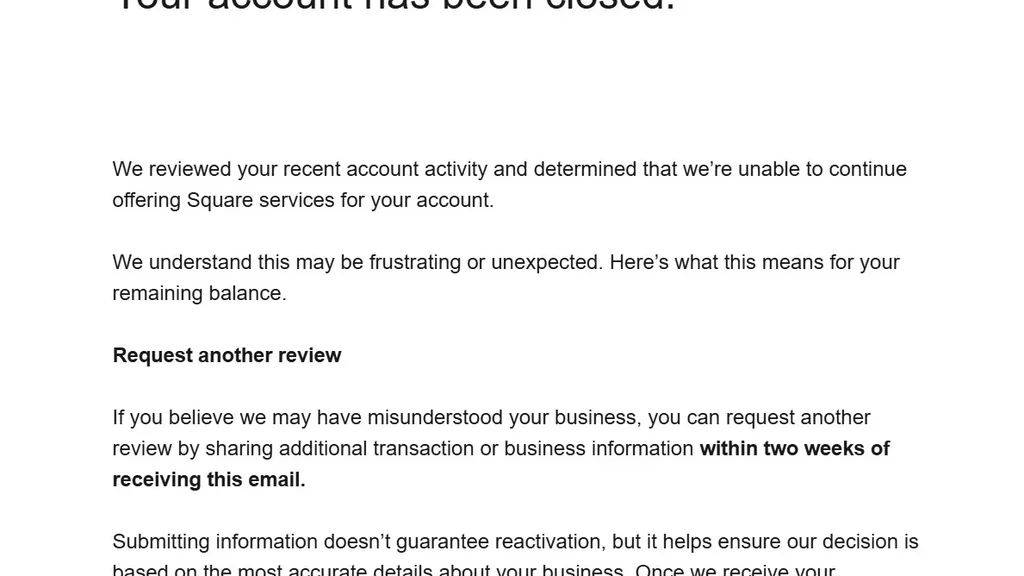
Despite this complete verification process, Square suspended the account. The suspension was not triggered by a missing document. The bank account did not fail verification. The IRS did not flag the EIN as fake. Instead, Square cited a rule that was not even listed as a standard reason for suspension. The business did not break this rule. The rule itself appeared to be non existent in the context of the suspension. The automated system had made its decision and did not allow for human review.
The business owner appealed the decision. Square promised a response within ten days. It took two weeks for a reply to arrive. The response was a denial. There was no explanation. There was no reason given. There was no human being to call and no office to visit. The owner was left with a cold denial from a machine that had never met the business.
The contract terms for Square offer little protection to the merchant. Section 12 of the General Terms of Service states that Square may terminate the terms or suspend the account at any time for any reason. The phrasing makes the reason optional. Section 13 addresses the effect of termination. It states that Square will not be liable to the merchant or any third party for compensation or damages for any termination or suspension of the services. This means the company can hold the money and disrupt the business without financial liability.
The Payment Terms add further layers of control. Section 12 allows Square to defer payout or restrict access to proceeds temporarily or indefinitely. This leaves the revenue from a paid client sitting in the company account while the merchant waits for a decision. Section 14 discusses the reserve for holding funds. It states that Square may require a reserve for any reason related to the use of the services. The amount is determined by Square alone. It is not set by a bank or a regulator. It is not determined by a judge. The company decides what is reasonable.
There is a notable contradiction in Square's own documentation. Section 1 of the Payment Terms opens with a confession. It states that Square is not a bank. The company describes itself as a payment facilitator and a processing company. It is a software platform that moves money. It is the pipe, not the reservoir. Yet this software company holds more power over the business than the actual bank. The bank must follow specific rules and explain its actions. The bank is subject to regulation. Square operates with a suspension button that has no off switch.
The contract also limits the options for the merchant who wants to fight back. Section 22 of the General Terms prohibits class actions and juries. It requires individual arbitration in Oakland, California. Section 19 caps the total liability of Square. The cap is the amount of fees earned in the three months before the problem or five hundred dollars, whichever is greater. This means the most the business is worth to the company, according to its own contract, is five hundred dollars.
Section 7 of the General Terms adds another layer of authority. It states that if there is a dispute about who owns the account, Square will be the sole arbiter of the dispute. The decision is final and binding on all parties. Square acts as the player, the referee, and the stadium. This structure leaves the merchant with few avenues for recourse.
Square maintains a list of unsupported industries in its Payment Terms. Item six on that list is direct marketing or subscription offers or services. A marketing and SEO firm is close to that category. The automated system does not need the rule to be strictly true. It only needs the rule to be convenient. The machine scrutinizes the business with zero reason and zero explanation. The merchant did everything right. The account was verified at every step. Yet the business was suspended by a rule that was not even a standard reason for suspension. The appeal took twice as long as promised and ended without a word.
The business cannot easily dispute the decision. To dispute it is to enter arbitration in Square's city under its rules. The prize is capped at five hundred dollars. The cost of the dispute may exceed the potential recovery. This dynamic discourages small business owners from challenging the system. They are left to accept the decision and wait for the money to be released.
The situation highlights a gap in the financial infrastructure for small businesses. There is no bank that has to explain itself in this specific context. There is no regulator that has to show its work in real time. There is no human being who has to look the owner in the eye and explain the suspension. There is only a dashboard. There is a denial. There is a machine that has never read the contract or spoken to the client. It has already decided the outcome.
This is not a traditional payment processor. It is a toll booth on the only road a business has. It is run by a company that is not a bank. It is governed by a contract that allows the company to act whenever it wants for any reason. The company owes the merchant nothing for the disruption. The verified business did everything right. Square did not need the business to do anything right. The system operated independently of the merchant's compliance.
The story reflects a broader trend in how digital platforms operate. Companies that are not banks are acting like banks. They hold funds and make decisions about access. They use automation systems to scrutinize businesses. They suspend accounts without clear reasons. They deny appeals without explanations. The merchant is left in a position of weakness. The company holds the leverage. The contract protects the company. The process is opaque.
For a small business owner, the impact is significant. The money is not just cash. It is revenue. It is the payment for work already done. It is the lifeblood of the company. When that money is held indefinitely, the business struggles. It may miss payroll. It may miss vendor payments. It may lose clients. The suspension affects the entire operation. The lack of explanation makes it harder to fix the issue. The owner does not know what to change. The owner does not know what to prepare. The owner is left to guess.
The contract terms are written in plain language but have complex implications. The ability to suspend at any time for any reason gives the company broad discretion. The limitation of liability protects the company from financial claims. The arbitration clause forces the merchant into a specific legal process. The cap on liability sets a low ceiling for recovery. These terms combine to create a system that favors the platform over the merchant.
The marketing and SEO firm in this case is not unique. Many small businesses rely on digital payment processors. They trust the platform to handle the money. They follow the verification steps. They expect the money to move as it should. When the system fails, the business suffers. The lack of human interaction makes the process feel cold and impersonal. The owner is a number in the system. The account is a data point. The decision is an algorithmic output.
The dispute raises questions about fairness in the digital economy. Small businesses are the backbone of the local economy. They create jobs and provide services. They need reliable access to their funds. When a payment processor holds those funds without reason, it disrupts the business. It creates uncertainty. It adds stress. It reduces the ability to operate. The owner must find other ways to pay bills. She must explain the delay to clients. She must manage the cash flow with one hand tied.
Square's position is protected by its contract. The terms are agreed to when the account is created. The merchant accepts the terms to use the service. The company enforces the terms when a dispute arises. The merchant is bound by the terms. The company is bound by the same terms. But the power imbalance is clear. The company has the resources. The company has the legal team. The company has the platform. The merchant has the business. The merchant has the clients. The merchant has the work.
More Business · Consumer Watch · Report a business · Got a Story?