Musk disputes Moon fuel math
SpaceX chief says eight flights will suffice, countering a NASA panel estimate of 22.
By Thabo Hoffmann ·
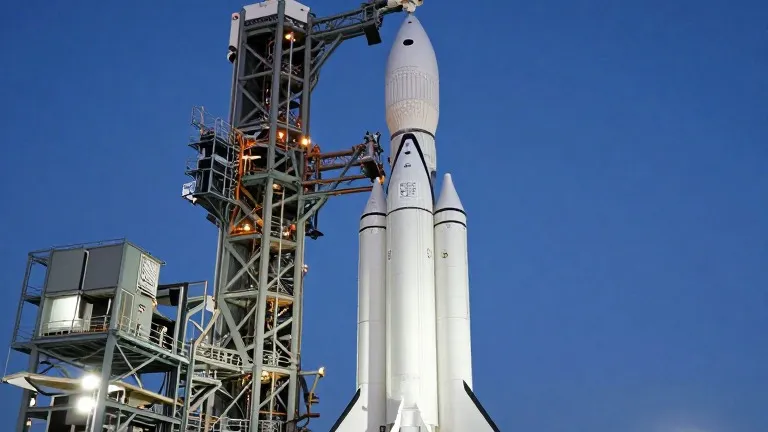
Elon Musk told a NASA safety panel that its estimate for lunar refueling is too high. The panel said 22 Starship launches are needed to fuel a Moon lander. Musk replied that the actual number will be six to eight.
The comment came after the Aerospace Safety Advisory Panel met on Thursday. Panel member Charlie Precourt, a former NASA astronaut, pointed to the fueling process as a key risk for Artemis IV. That mission is scheduled to put a crew on the Moon in 2028. Precourt noted that the last estimate for required fuelings was around 22 flights.
Eric Berger of Ars Technica shared Precourt’s remark on X. Musk responded directly to the post. He wrote, “That’s way too high. Actual number will be more like 6 to 8.”
The difference in numbers comes down to how Starship works in orbit. The rocket uses nearly all its propellant to reach Earth orbit. It cannot fly to the Moon without a top-off. SpaceX plans to use a depot in orbit as a fuel station. Tanker ships launch, dock with the depot, and transfer their remaining propellant. Once the depot is full, the lunar lander departs for the Moon.
Each tanker launch is a full rocket launch. More launches mean more time, cost, and potential for failure. Berger estimated that even with two launches per week by the end of 2027, filling a depot at the panel’s 22-flight rate would take about three months. The final count depends on how much propellant each ship can deliver and how much is lost to boil-off in the cold of space.
Musk has pushed back on higher numbers before. In 2021, he called a government estimate of 16 launches “extremely unlikely” and said eight tankers would be the maximum. His current range assumes a more capable version of the vehicle. SpaceX plans to use its upgraded V3 Starship for the refueling tests.
Precourt acknowledged that Artemis IV involves many first-time technologies. He also praised NASA Administrator Jared Isaacman’s team for clearing hurdles for both SpaceX and Blue Origin. Blue Origin’s lander does not rely on orbital refueling for its first mission.
Source: Teslarati