Mud and Tractors Mark Navajo Vote
Resident Phyllis Yazzie lost her home and ID documents in October flooding, yet her 92-year-old mother cast a ballot at the Dennehotso Chapterhouse.
By Emmanuel Obasi ·
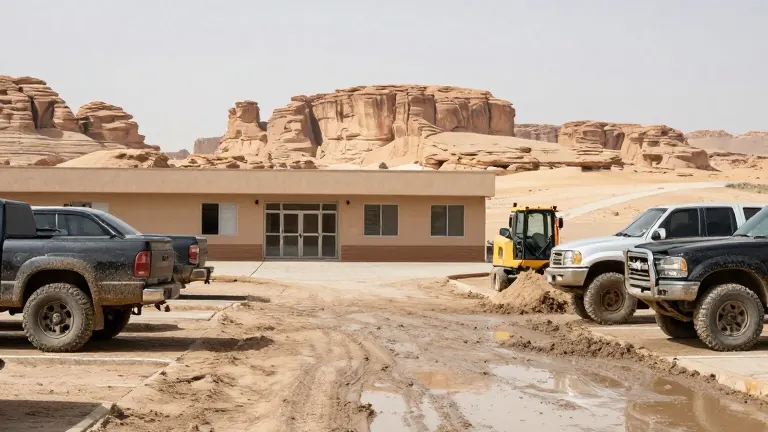
Floodwaters from as far as 60 miles away raced toward the town of Dennehotso on October 22, overwhelming man-made earth dams and carving ravines through residential dirt roads. The storm knocked out power and water, leaving parts of the community covered in thick, reddish brown silt. Despite the damage, voters traveled to the local Chapterhouse on November 3 to cast ballots.
The flood was the third to hit the area in the last month. Local contractor Kev Woolboy was coordinating response efforts when the water arrived. He noted that the earth dams failed because the volume of rain was too high. By nightfall, Woolboy was guiding Navajo Police Department officers in an amphibious vehicle. The mix of rain and silt made it impossible to see the ground, forcing the rescue team to turn back without reaching everyone.
Phyllis Yazzie, 74, was at home having breakfast when her niece warned her the flood was heading her way. She and her son drove out their dirt road but were forced back to the highest point on their land. They spent the night in their vehicle while rescue teams tried to reach them. Two weeks later, residents were still digging out debris.
On election day, a backhoe built a temporary road to connect cut-off residents to the polling site. Volunteer drivers and Chapter employees also shuttled voters who had to drive hours to arrive. Trucks with mud-caked tires filled the parking lot, where people gathered to eat fry bread and mutton stew.
Urbina Yazzie, 27, observed that many voters arrived on tractors to cross washed-out roads. She described the election as unusual due to the travel difficulties. Vera Begay accompanied her 92-year-old mother, Lilien Begay, to the polls. Lilien Begay lost her home and all identification documents in the October flood but still voted. Vera Begay said her mother has never missed a vote in her life.
Lilien Begay, speaking in Navajo, described herself as emotionally devastated by the loss. Urbina Yazzie noted that the community came together during the crisis. She said the difficult conditions made the act of voting feel more weighty for those who participated.