Apple's 25-Year-Old iPod Still Defines Portable Music
A quarter century ago, a compact device changed how people carry their favorite songs, setting a standard that smartphones eventually inherited.
By Lucas Collins ·
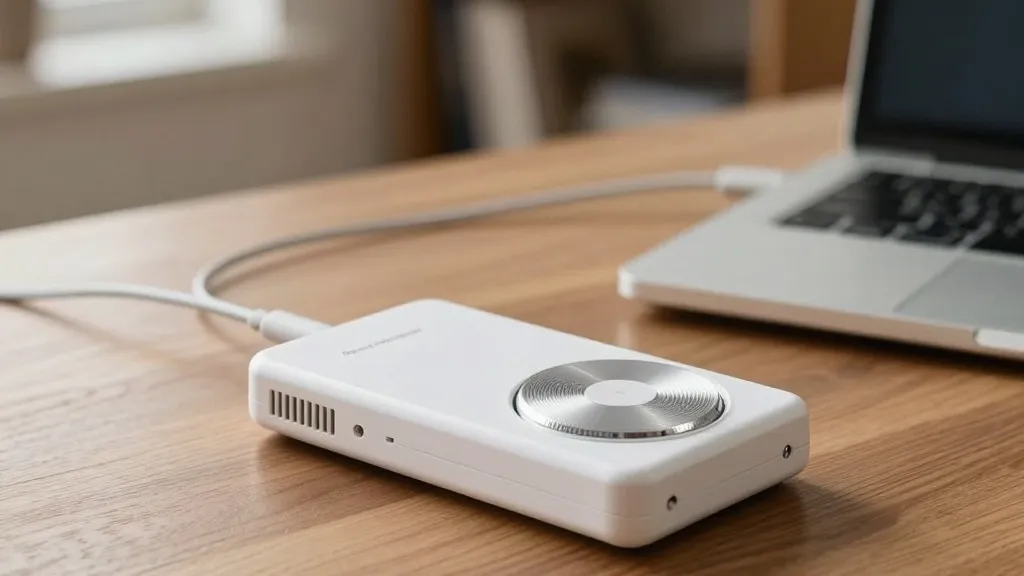
For anyone who grew up with a phone, the idea of needing a separate device just to listen to music feels ancient. Yet, for a specific generation, the original iPod was the essential tool that made carrying a personal soundtrack possible. On this day in 2001, Apple CEO Steve Jobs revealed a gadget that promised to hold an entire music library in the palm of your hand. At a price of $399, it offered five gigabytes of storage, a capacity that allowed users to store approximately 1,000 songs. This was a significant shift from the era of CDs and early flash drives, which could only hold a fraction of a user's collection.
The timing of the launch was critical for Apple. The company had recently recovered from the dot-com bubble burst, having successfully steered its brand away from beige computers into the sleeker Mac OS X era. Jobs envisioned the Mac as the central hub for a user's digital life, connecting cameras, DVD players, and portable music devices. He noted that while competitors like Sony and Creative already had portable players, none had found the right recipe for digital music. Apple chose the hard disk-based approach over flash memory because it offered more storage for the price, targeting a massive market that lacked a clear leader.
The hardware relied on a specific component from Toshiba: an ultra-compact 1.8-inch hard drive that was only 0.2 inches thick. This technology allowed the device to be the size of a deck of cards, measuring 2.4 by 4 by 0.78 inches and weighing just 6.5 ounces. Jobs highlighted that it was lighter than most cell phones of the time. Despite its small footprint, the player supported MP3, WAV, and AIFF formats with CD-quality sound. The design featured a minimalist back and sides, with a scroll wheel that used a piezoelectric clicker for tactile feedback, making it easy to navigate music by artist or playlist with one hand.
Connectivity was another major selling point. The device used a single FireWire 400 cable for both charging and data transfer. Jobs claimed this connection was fast enough to move an entire CD of music in five to 10 seconds, whereas USB connections of that era could take up to five minutes for the same task. Filling the player with 1,000 songs would take about 10 minutes via FireWire, compared to five hours on a typical USB device. The rechargeable lithium-polymer battery provided 10 hours of continuous playback and could reach 80 percent charge in one hour.
The software experience was integral to the device's success. iTunes 2 launched on the same day, introducing features like MP3 CD burning and auto-sync. This auto-sync feature ensured that any playlists or libraries curated on a Mac were automatically updated on the player whenever it was connected. The device also functioned as an external FireWire hard drive, adding utility beyond music. The first song demonstrated on stage was 'Building a Mystery' by Sarah MacLachlan, a choice that resonated with the audience.
The iPod's dominance lasted until the smartphone era fully matured. The first iPhone arrived in early 2007, and the two devices coexisted in Apple's lineup for over a decade. However, the iPod's relevance gradually faded as phones became more capable. The final model, the 7th-generation iPod Touch, was released in May 2019. Although the line was left without updates for a few years, Apple officially discontinued the product in May 2022, marking the end of a 25-year journey that started with a simple promise: your entire music library, in your pocket.
Source: Tom's Hardware · original report published